Designing Vehicle Fitouts That Maximise EV Payload
Jun 3, 2026
As more organisations transition to electric vehicles (EVs), fleet managers are discovering that vehicle selection is only one part of the equation. While electric vans offer significant benefits in terms of operating costs, emissions reduction and corporate sustainability goals, they also introduce a new challenge: payload management.
Unlike traditional diesel vehicles, EVs carry large battery packs that can significantly impact available payload capacity. This makes fitout design more important than ever. Every kilogram added to the vehicle affects how much equipment, tools and materials can be safely carried.
The good news is that with the right approach, it is possible to create highly functional service vehicle fitouts while maximising available payload.
Why Payload Matters in Electric Vehicles
Payload refers to the total weight a vehicle can legally carry, including:
- Vehicle fitout components
- Tools and equipment
- Parts and consumables
- Auxiliary electrical systems
- Occupants
Exceeding a vehicle’s Gross Vehicle Mass (GVM) can create safety risks, impact vehicle performance and potentially expose organisations to compliance issues.
Because EVs often have lower payload capacities than their diesel equivalents, careful consideration must be given to every component installed within the vehicle.
Start With a Weight-Conscious Design Philosophy
The most effective EV fitouts are designed around operational requirements rather than simply replicating an existing diesel vehicle layout.
A common mistake is attempting to transfer a traditional fitout directly into an electric vehicle without reviewing whether every component is still necessary.
Instead, fleet managers should ask:
- What equipment genuinely needs to be carried every day?
- Can storage systems be simplified?
- Are there opportunities to reduce duplicate tools or materials?
- Can technology replace physical inventory in some situations?
By focusing on operational efficiency rather than storage volume alone, significant weight savings can often be achieved.
Select Lightweight Fitout Materials
Material selection plays a major role in overall fitout weight.
Modern fitout systems can be manufactured from a variety of materials including:
- Aluminium
- Lightweight composite panels
- High-strength engineered timber products
- Thin-gauge steel where appropriate
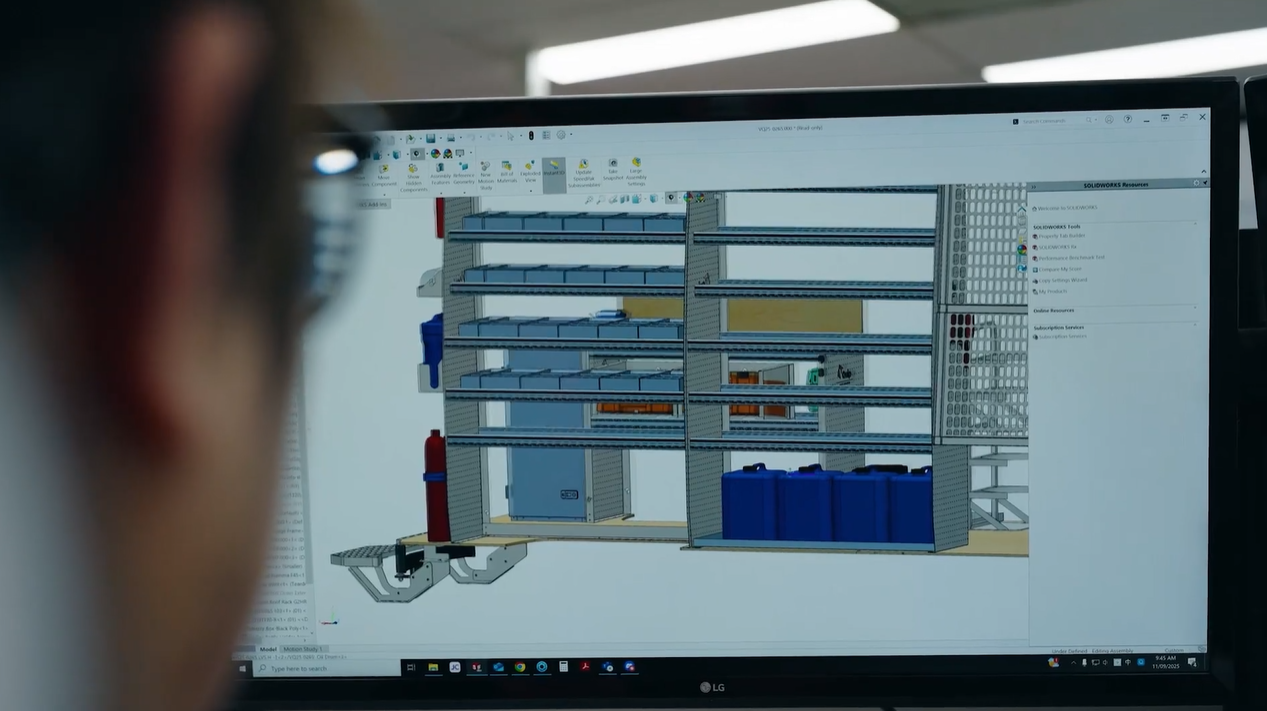
At VQuip, our engineering team carefully considers the weight implications of every design decision. Advances in material technology mean that lightweight components can still provide the durability required for demanding fleet environments.
The goal is not simply to make components lighter, but to optimise the balance between weight, strength and longevity.
Review Auxiliary Electrical Requirements
Many service vehicles require auxiliary electrical systems to power equipment such as:
- Inverters
- Refrigeration systems
- Air compressors
- Lighting
- Charging equipment
In traditional diesel vehicles, dual battery systems were often added with minimal consideration of weight. In EV applications, however, battery selection becomes much more critical.
Careful system design can minimise unnecessary battery capacity while still meeting operational requirements. In some cases, vehicle manufacturers may also provide approved integration methods that reduce the need for additional components.
Design Storage Around Actual Usage
One of the largest opportunities for weight reduction comes from understanding how technicians use their vehicles.
Many fleets discover that:
- Certain tools are rarely used
- Spare parts inventories have grown unnecessarily over time
- Storage systems contain significant unused space
A fitout designed around actual technician workflows can often reduce both weight and complexity while improving productivity.
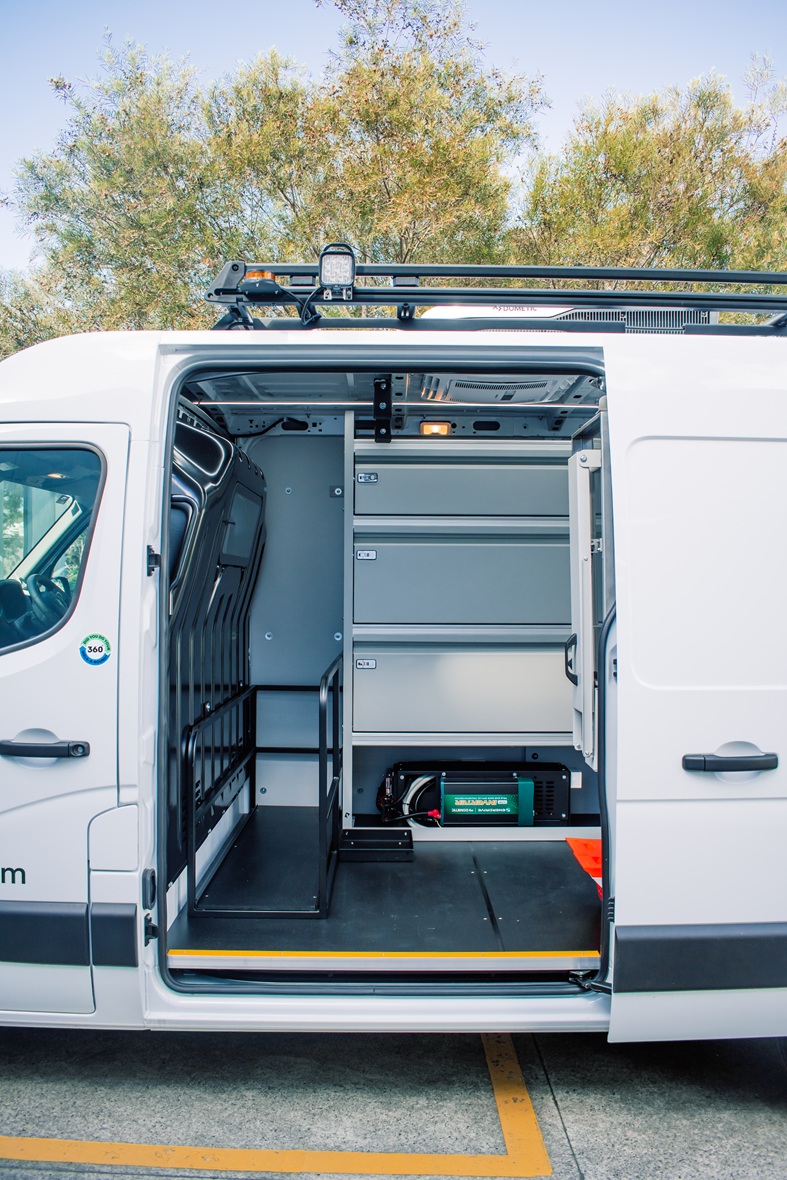
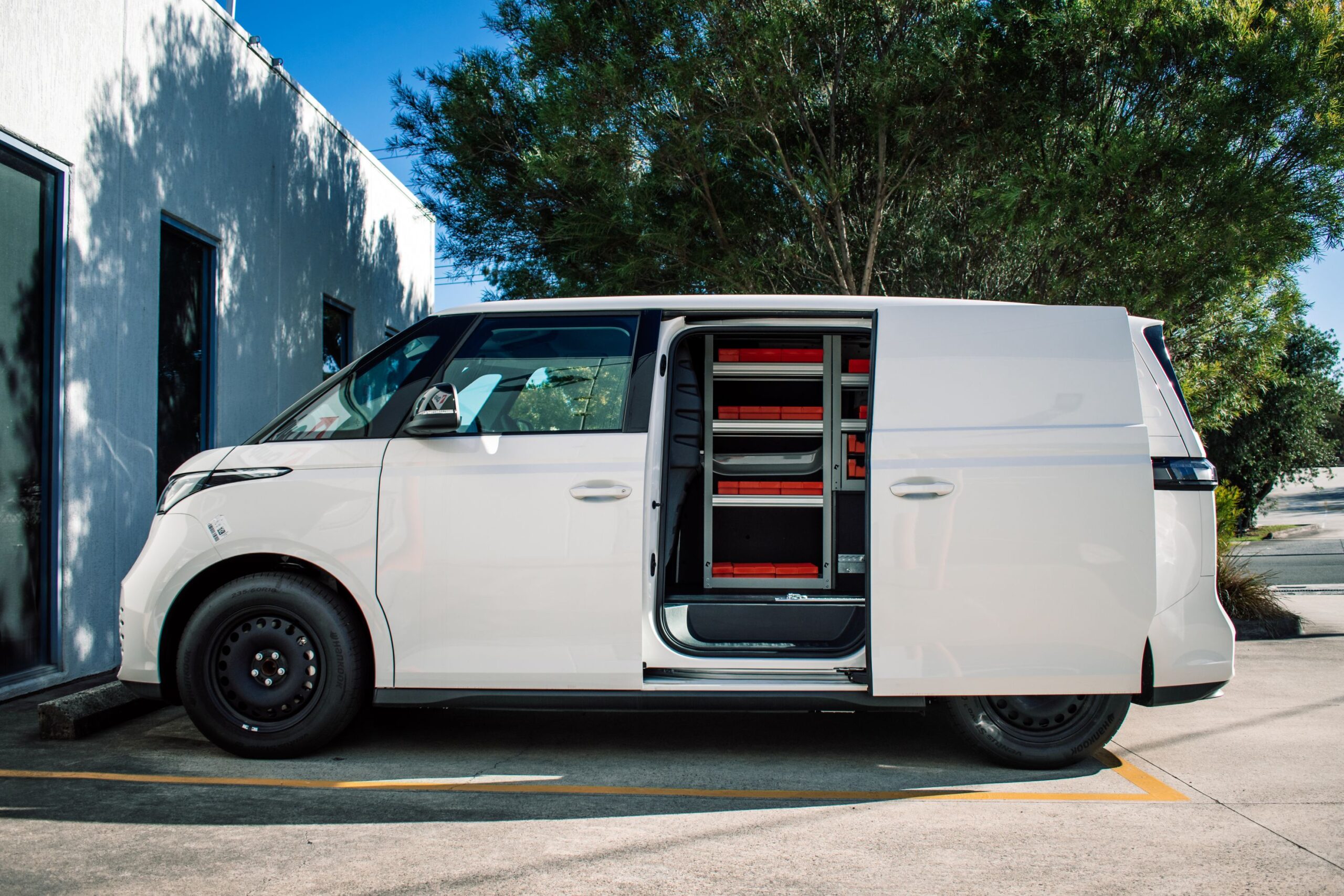
Well-organised shelving, carry case storage systems and dedicated equipment zones help ensure technicians carry what they need without transporting unnecessary items every day.
Consider Vehicle-Specific Constraints
Electric vehicles introduce design considerations that may not exist in traditional vans.
These can include:
- Battery protection zones
- Restrictions on floor drilling
- Manufacturer-approved mounting locations
- High-voltage component access requirements
- Weight distribution considerations
A fitout designed specifically for the vehicle platform helps ensure compliance with manufacturer requirements while protecting critical EV systems.
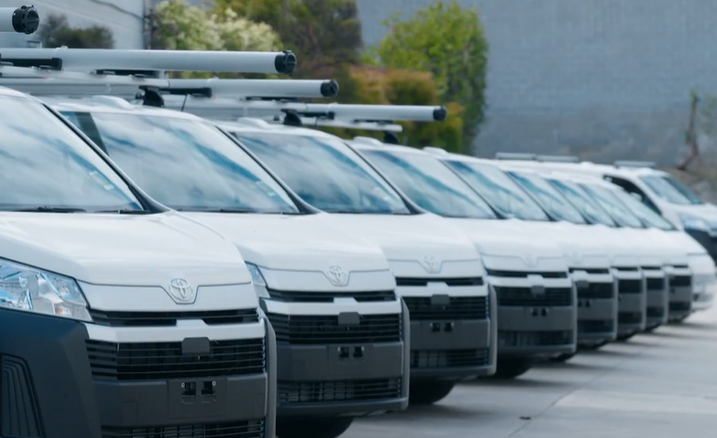
This is particularly important as more fleets adopt vehicles such as the Mercedes eVito, Ford E-Transit and other emerging electric commercial platforms.
Think Beyond Payload Alone
While payload is important, the objective should not simply be to build the lightest fitout possible.
An effective EV fitout must also deliver:
- Technician productivity
- Safety
- Durability
- Ease of maintenance
- Long-term fleet reliability
The most successful designs achieve a balance between weight reduction and operational performance, ensuring technicians have everything they need to perform their role efficiently.
The Future of EV Fleet Fitouts
As electric commercial vehicles continue to evolve, manufacturers are steadily increasing payload capacities and vehicle capabilities. However, weight-conscious design will remain a critical consideration for fleet managers seeking to maximise the value of their EV investment.
By selecting lightweight materials, reviewing operational requirements, optimising storage systems and carefully considering auxiliary electrical requirements, organisations can create EV fitouts that maintain productivity while preserving valuable payload capacity.
At VQuip, our engineering team works closely with fleet operators to design practical, weight-conscious vehicle fitouts that maximise the potential of modern electric commercial vehicles while maintaining the durability and functionality required for real-world operations.