Why Clean-Up Accessories Should Be Part of Every Vehicle Fitout
Jan 20, 2026
When vehicle fitouts are discussed, the focus is usually on storage, payload, or how much equipment can be carried. What is often overlooked is what happens at the end of the job.
For technicians working on site every day, the ability to clean up properly matters. That includes cleaning the van itself, as well as leaving a customer’s site tidy and safe. Fitouts that support clean-up are not just about presentation. They influence safety, efficiency, hygiene, and how your business is perceived.
A good fitout should help technicians do the work properly and finish the job properly.
What happens when clean-up is an afterthought
When vehicles are not set up with dedicated clean-up equipment, patterns quickly emerge.
Dust and debris accumulate in the back of the van. Spills are wiped up with whatever is nearby. Rubbish is stored loosely or forgotten. Hands are cleaned quickly rather than properly. Over time, the vehicle becomes harder to work in and less pleasant to use.
These small issues compound. Loose debris becomes a slip or projectile risk. Contaminants are transferred from job to job. Vehicles deteriorate faster. Customers notice when a technician leaves behind mess or tracks dirt through a site.
None of this is usually intentional. It happens because the fitout does not support good habits.
Clean vehicles support safer work
Cleanliness directly affects safety.
Dust, offcuts, and packaging left on the floor can move under braking. Liquids can create slip hazards inside the vehicle. Poor hygiene increases the risk of skin irritation, eye issues, or infection, especially for technicians moving between multiple sites in a day.
Including proper clean-up and safety items as part of the fitout makes it easier to control these risks consistently, rather than relying on improvised solutions.
Fitout inclusions that make a real difference
Dustpan and brush with a proper holder
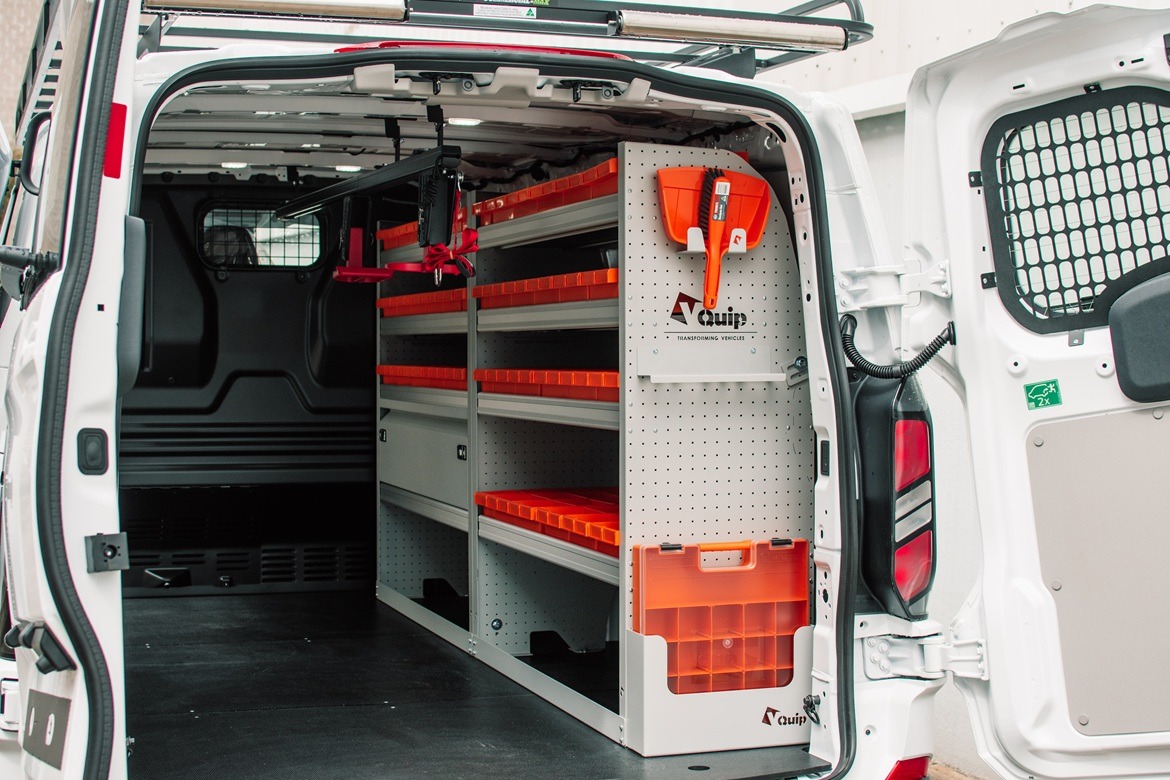
A dustpan and brush may seem basic, but when it has a dedicated, visible home inside the vehicle, it gets used.
Technicians can quickly sweep out the van or tidy a work area before leaving site. Because the item is mounted, it does not end up buried under tools or left loose on the floor. This supports cleaner vehicles and faster end-of-job routines.
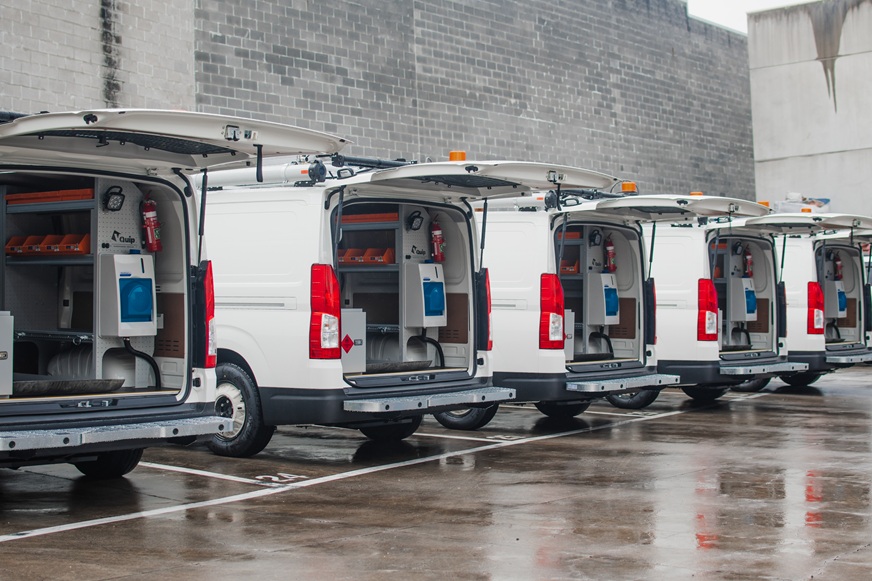
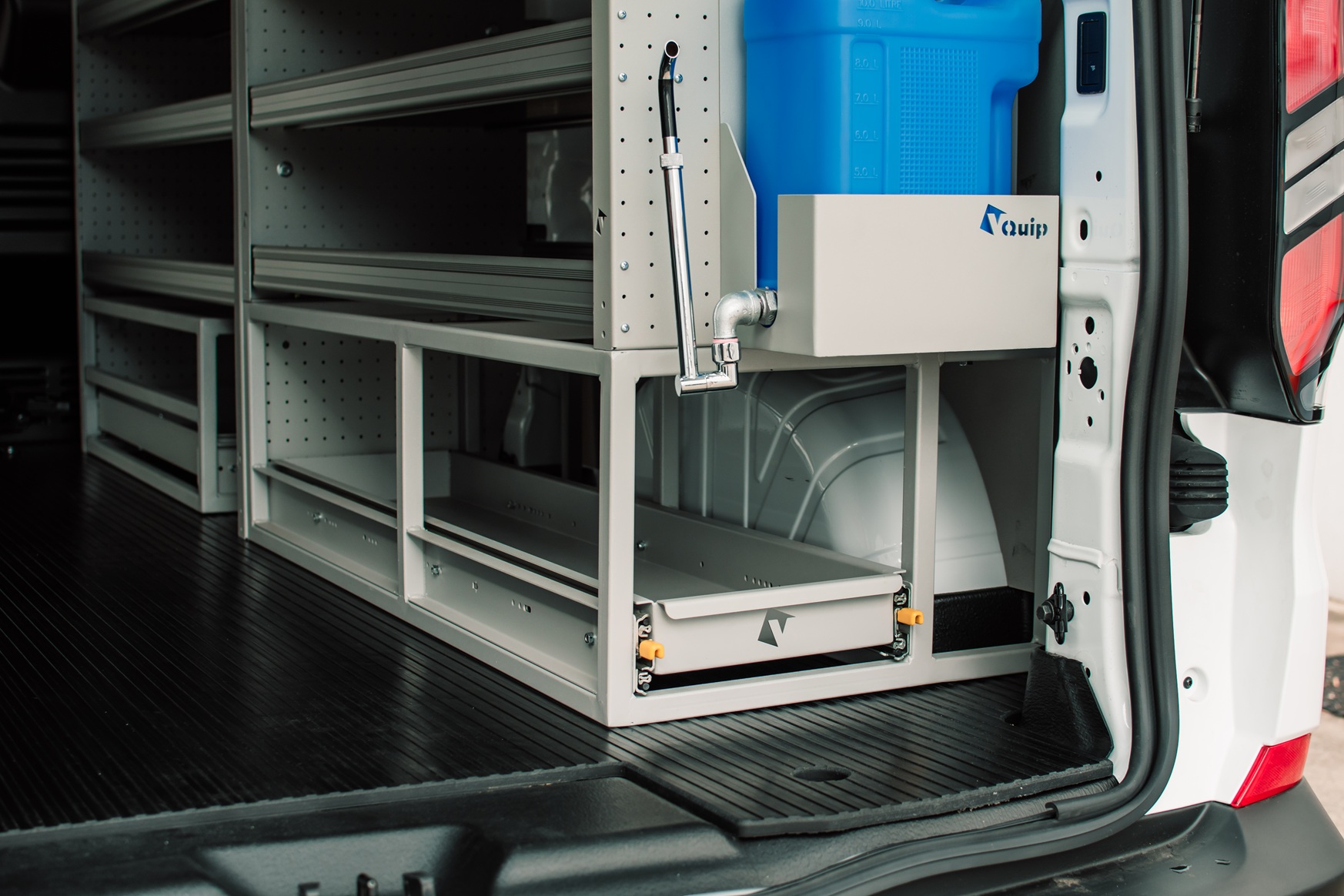
Water tanks mounted securely
Access to water is one of the most useful things a mobile technician can have.
A compact water tank mounted in a proper holder allows equipment to be rinsed, dust to be washed away, and minor spills to be dealt with immediately. It also supports handwashing when paired with appropriate accessories.
Correct mounting is critical. A properly secured tank prevents movement, protects payload limits, and ensures the vehicle remains compliant with load restraint requirements.
Spill kits that are easy to reach
Spills are inevitable in many service environments, whether that involves oils, coolants, chemicals, or contaminated water.
A spill kit stored in a known and accessible location allows technicians to respond straight away. Quick containment reduces risk to people, vehicles, and the environment, and demonstrates professionalism on site.
For fleets working in regulated or customer-sensitive environments, this can also support compliance obligations.
Hot and cold hand-wash units
Hand hygiene matters more than many people realise.
A hot and cold handi-wash unit allows technicians to properly clean their hands on site, rather than relying on wipes or waiting until the next stop. This reduces contamination inside the vehicle and improves comfort, particularly for technicians who move between multiple jobs each day.
From a customer’s perspective, seeing a technician wash up properly before packing up or entering an office space leaves a strong positive impression.
First aid kits that are visible and accessible
Minor injuries are part of field work. How quickly they are dealt with matters.
A first aid kit that is mounted, clearly labelled, and easy to access allows small injuries to be treated immediately. This reduces downtime and helps prevent minor issues from becoming bigger problems.
When first aid kits are loose or buried under tools, they are often not used when they are needed most.
Fire extinguishers as a practical safety measure
Fire extinguishers should not be treated as a box-ticking exercise.
Mobile work environments often involve electrical equipment, heat, fuel, or mechanical processes. A correctly rated extinguisher that is securely mounted and easy to reach is essential.
Including fire extinguishers as part of the planned fitout ensures consistent placement across the fleet and avoids situations where access is compromised.
Clean-up capability reflects directly on your brand
Customers may not comment on a clean vehicle, but they will notice when a site is left untidy or when hygiene is lacking.
Technicians who clean the work area, wash their hands, and pack away equipment neatly reinforce professionalism and care. Across a fleet, that consistency strengthens trust and reduces complaints and callbacks.
It also affects technicians themselves. Clean, organised vehicles are easier to work from and are more likely to stay that way over time.
Designing for clean-up is designing for real work
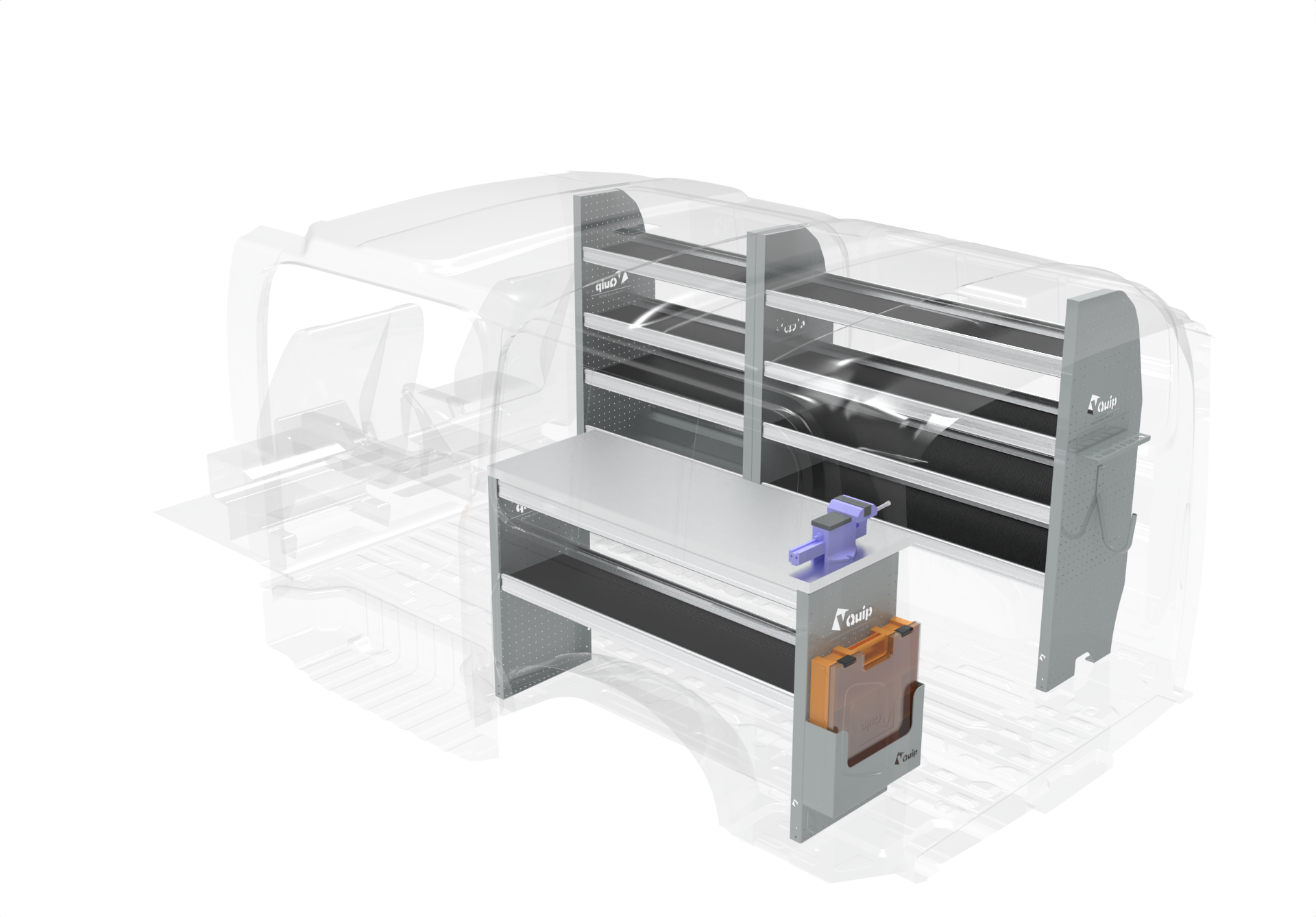
The best fitouts consider the full job cycle.
Arrival.
Work.
Clean-up.
Departure.
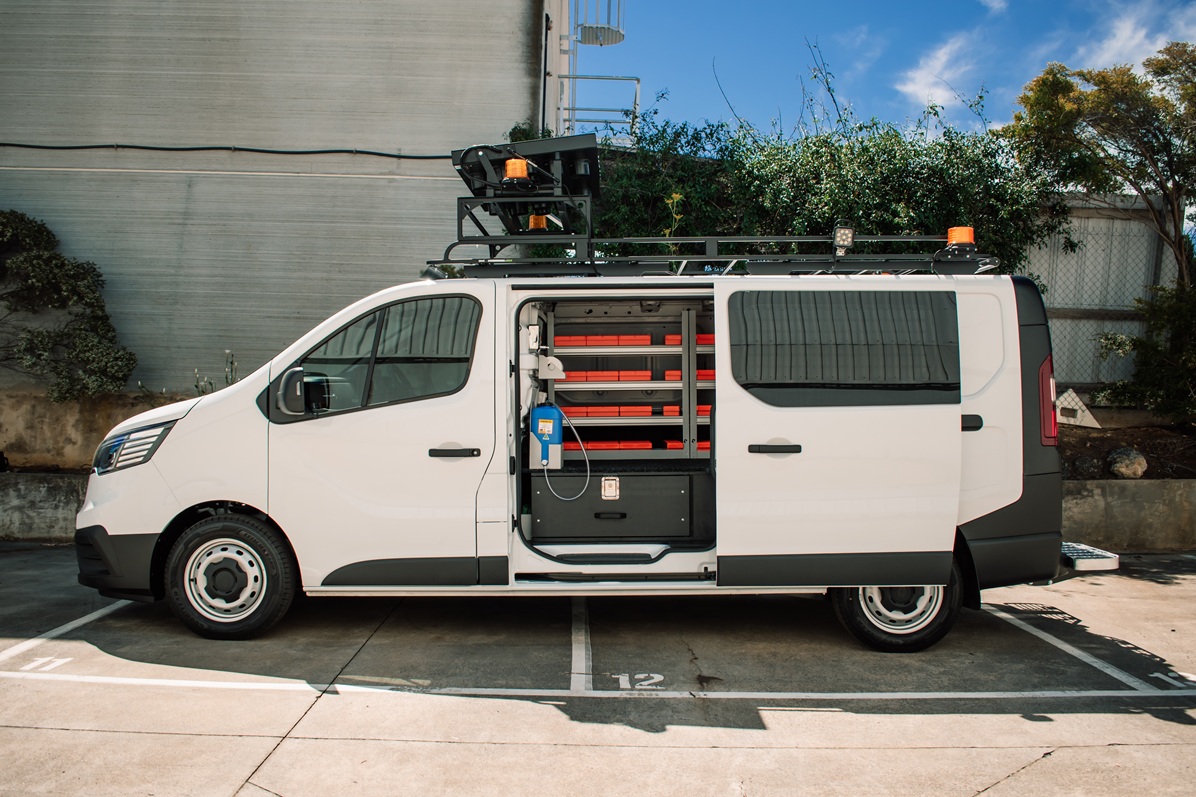
By building clean-up and safety capability into the vehicle layout from the start, fleets improve safety, reduce wear and tear, and lift the overall customer experience.
Clean-up is not an extra. It is a fundamental part of fit-for-purpose vehicle design.