Top 10 Fleet Fitout Specification Mistakes
Aug 5, 2026
A fleet vehicle can meet every requirement in a written specification and still be frustrating to work from.
This often happens because fleet fitout specifications focus heavily on what must be installed, but not enough on how the vehicle will be loaded, accessed and used throughout the working day.
Small oversights made during the specification stage can lead to unnecessary weight, wasted storage, inefficient technician workflows and inconsistent vehicles across a rollout. Here are ten of the most common mistakes to avoid.
1. Selecting the vehicle before understanding the fitout
Vehicle selection and fitout design should be considered together.
A vehicle may appear suitable based on purchase price, cargo volume or availability, but become less suitable once shelving, drawers, equipment, spare parts and auxiliary electrical systems are added.
Before confirming the vehicle, consider:
- Required payload after the fitout is installed
- Internal dimensions and door openings
- Access through side and rear doors
- Available mounting points
- Roof load requirements
- Electrical power demands
- Expected equipment and stock levels
Understanding the complete operational requirement first can help prevent compromises later in the project.
2. Specifying storage without understanding workflow
A list of tools and parts does not explain how technicians use them.
Frequently accessed items should generally be easy to reach from the most appropriate door. Heavy equipment may need to remain low in the vehicle, while valuable tools may require secure storage.
A good specification considers the sequence of work:
- Where does the technician enter or access the vehicle?
- What do they retrieve most often?
- Which tasks are completed inside or beside the vehicle?
- What needs to be returned to the vehicle during the job?
- What equipment is only used occasionally?
This turns the fitout into a working system rather than a collection of storage products.
3. Failing to involve technicians early
Fleet, procurement and operations teams understand the broader commercial requirements. Technicians understand what happens at the side of the vehicle every day.
Leaving technicians out of the early specification process can result in shelving that does not suit actual stock, drawers that open in the wrong direction or commonly used equipment being difficult to access.
Technician input should not mean every individual preference is included. The objective is to identify recurring workflow requirements, genuine operational problems and practical variations between roles.
4. Assuming one layout will suit every role
Standardisation can make a fleet easier to quote, manufacture, maintain and replace. However, excessive standardisation can create its own problems.
Two technicians may drive the same vehicle model but carry completely different equipment. A maintenance technician, electrician and communications technician may each need different storage, power and access arrangements.
A stronger fleet standard often combines:
- A common base fitout
- Standard components and accessories
- Defined role-based variations
- Controlled optional equipment
- Consistent documentation and quality requirements
This preserves the benefits of standardisation without forcing every technician into an unsuitable layout.
5. Treating payload as an afterthought
Payload can disappear quickly once the fitout, tools, spare parts, accessories and occupants are included.
The total operating weight may include:
- Shelving, drawers and cabinetry
- Floors, barriers and linings
- Roof racks, ladders and conduits
- Batteries, inverters and electrical equipment
- Towbars, steps and external accessories
- Tools, materials and spare parts
- Driver and passengers
Payload should be reviewed during concept development, not after the vehicle has been fitted out. Adding unnecessary storage can also encourage technicians to carry more stock than they actually need.
6. Specifying capacity without considering accessibility
More storage is not always better storage.
Deep shelves can technically hold more equipment, but items at the back may be difficult to see and retrieve. Large drawers can become heavy and disorganised. Shelving positioned too high may be unsuitable for frequent access.
A fitout should balance capacity with:
- Reach
- Visibility
- Organisation
- Loading effort
- Item weight
- Frequency of use
The objective is not simply to use every available space. It is to make the right equipment easy to locate, retrieve and return.
7. Underestimating electrical requirements
Auxiliary electrical systems are often specified around the equipment currently in use, without allowing for operating conditions or future requirements.
The specification should clearly define:
- Equipment that will be powered
- Starting and continuous power demand
- Expected operating duration
- Charging opportunities
- Battery location and capacity
- Inverter requirements
- Lighting and accessory loads
- Potential future equipment
An auxiliary power system should be designed around a realistic duty cycle. Simply installing a larger battery or inverter does not automatically create a suitable system.
8. Overlooking load restraint and storage security
Shelving provides organisation, but it does not necessarily restrain every item carried in the vehicle.
The specification should consider how tools, containers, cylinders, ladders, loose materials and bulky equipment will be secured during normal driving and sudden vehicle movements.
Security also requires separate consideration. Window protection, lockable compartments, concealed storage and equipment retention may all be relevant depending on the operating environment.
Load restraint and theft protection should be designed into the layout rather than added after the first vehicles enter service.
9. Skipping the prototype and validation stage
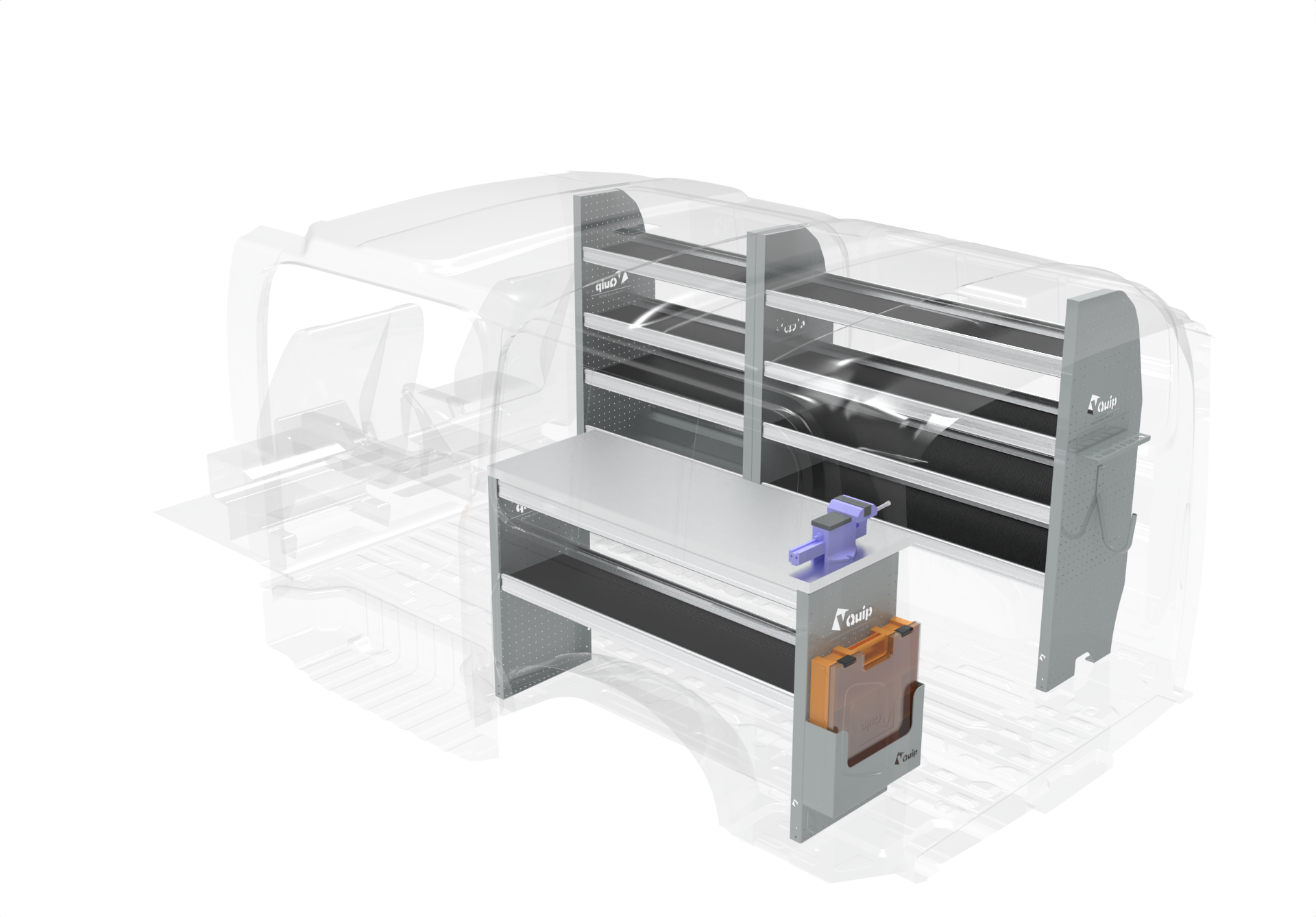
A concept render is valuable, but it cannot answer every practical question.
A prototype provides an opportunity to check:
- Technician access and reach
- Actual equipment sizes
- Door and drawer clearances
- Weight distribution
- Installation methods
- Vehicle-specific constraints
- Production time and repeatability
- Opportunities to simplify the build
For larger fleet programs, the first vehicle should be treated as a validation build. Feedback and approved changes can then be incorporated into the production documentation before the broader rollout begins.
10. Specifying the vehicle for handover day only
The fitout must continue to work after years of use, equipment changes and servicing.
A lifecycle-focused specification considers:
- Replaceable and repairable components
- Access to electrical equipment
- Availability of replacement parts
- Consistent component locations
- Future vehicle replacements
- Fitout documentation
- Quality assurance records
- Support across different operating locations
The lowest initial fitout price may not represent the best whole-of-life value if the design is difficult to maintain, repair or reproduce.
A better specification starts with the work
The most effective fleet fitout specifications begin with a clear understanding of the technician’s role, equipment, workflow and operating environment.
From there, the vehicle, layout, payload, accessories and electrical system can be developed as one coordinated solution – a standardised vehicle fleet fitout.
VQuip works with fleet teams through discovery, concept development, technical validation, prototyping and rollout planning to develop fitouts that are practical to manufacture and practical to use.
If you are developing or reviewing a fleet fitout specification, speaking with the fitout provider early can help identify potential issues before they become expensive changes.