What Fleet Managers Should Know Before Choosing Electric Vans
Mar 15, 2026
Electric vans are becoming an increasingly realistic option for commercial fleets. Improvements in battery technology, expanding vehicle choice, and pressure to reduce emissions are pushing many organisations to explore electrification.
For fleets operating service vans, delivery vehicles, or mobile technician units, electric vans can offer lower operating costs and reduced environmental impact. However, the transition is not as simple as swapping a diesel van for an electric one.
Vehicle payload, auxiliary equipment, charging infrastructure, and fitout design all play a role in determining whether an electric van will work effectively in a real fleet environment.
For fleet managers considering the move, there are several practical factors worth understanding before making the decision.
Payload Impact from Batteries
One of the most important differences between electric vans and traditional diesel models is the weight of the battery pack.
Electric vehicle batteries can weigh several hundred kilograms, which directly affects how much payload the vehicle can legally carry. Larger battery packs typically increase driving range but also add weight, reducing the available payload capacity.
Electric vans typically offer payload capacities between roughly 600 kg and 1,700 kg depending on model and configuration.
For fleets carrying tools, equipment, spare parts, or shelving systems, this makes payload management particularly important. A van that works well as a diesel model may operate much closer to its weight limits once converted to an electric platform.
This means fleet managers should carefully consider:
-
technician tools and equipment weight
-
shelving and storage systems
-
auxiliary batteries or inverters
-
load distribution within the vehicle
Understanding the combined weight of the fitout and equipment is essential to ensure the vehicle remains compliant and safe to operate.
Auxiliary Power Systems
Many commercial vans rely on auxiliary electrical systems to power equipment such as:
-
inverters for charging tools
-
refrigeration units
-
lighting systems
-
communications equipment
-
specialist tools or machinery
In diesel vehicles, these systems are often powered by dual-battery setups connected to the engine alternator.
Electric vans operate differently. The vehicle’s main traction battery powers the drivetrain, and tapping into that system for auxiliary loads requires careful integration.
For fleet vehicles that operate as mobile workshops, the design of the auxiliary electrical system becomes a critical part of the fitout.
Fitout Weight Management
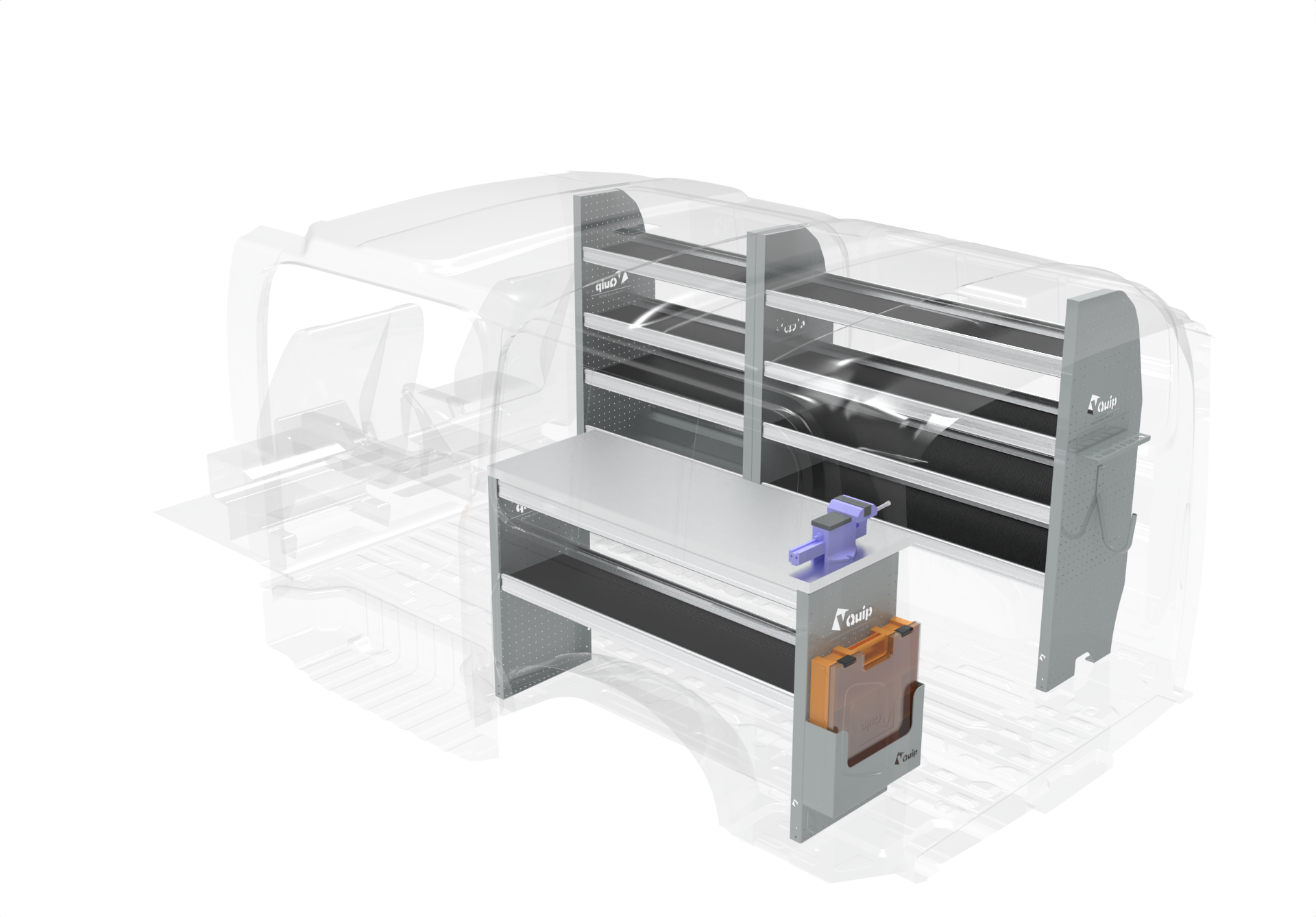
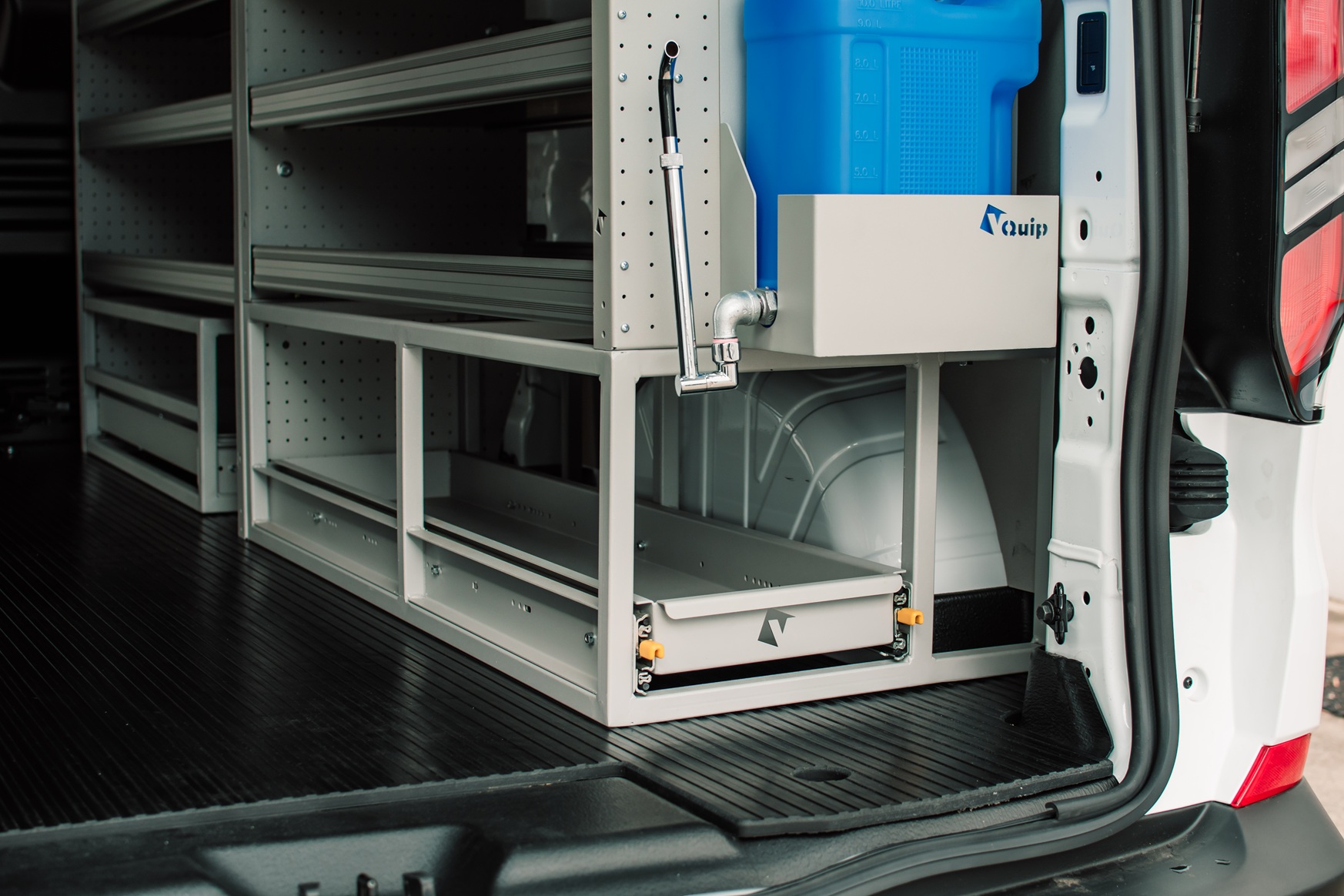
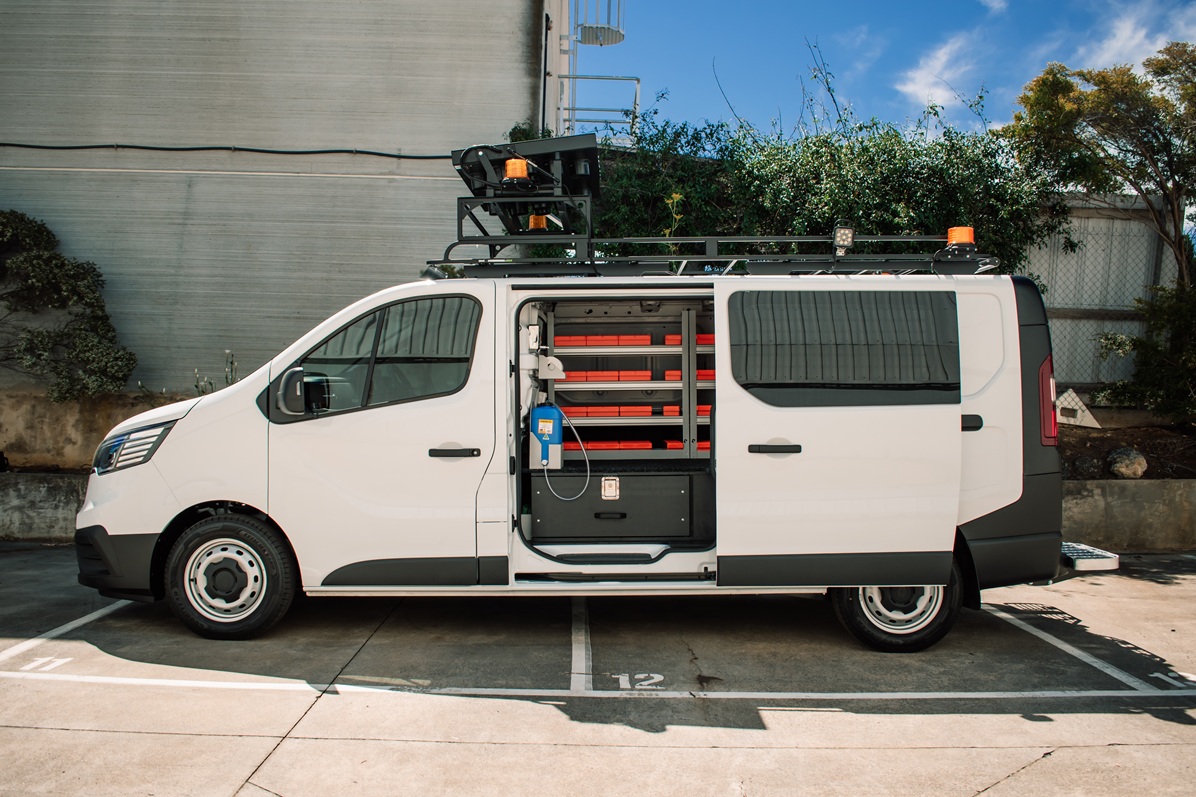
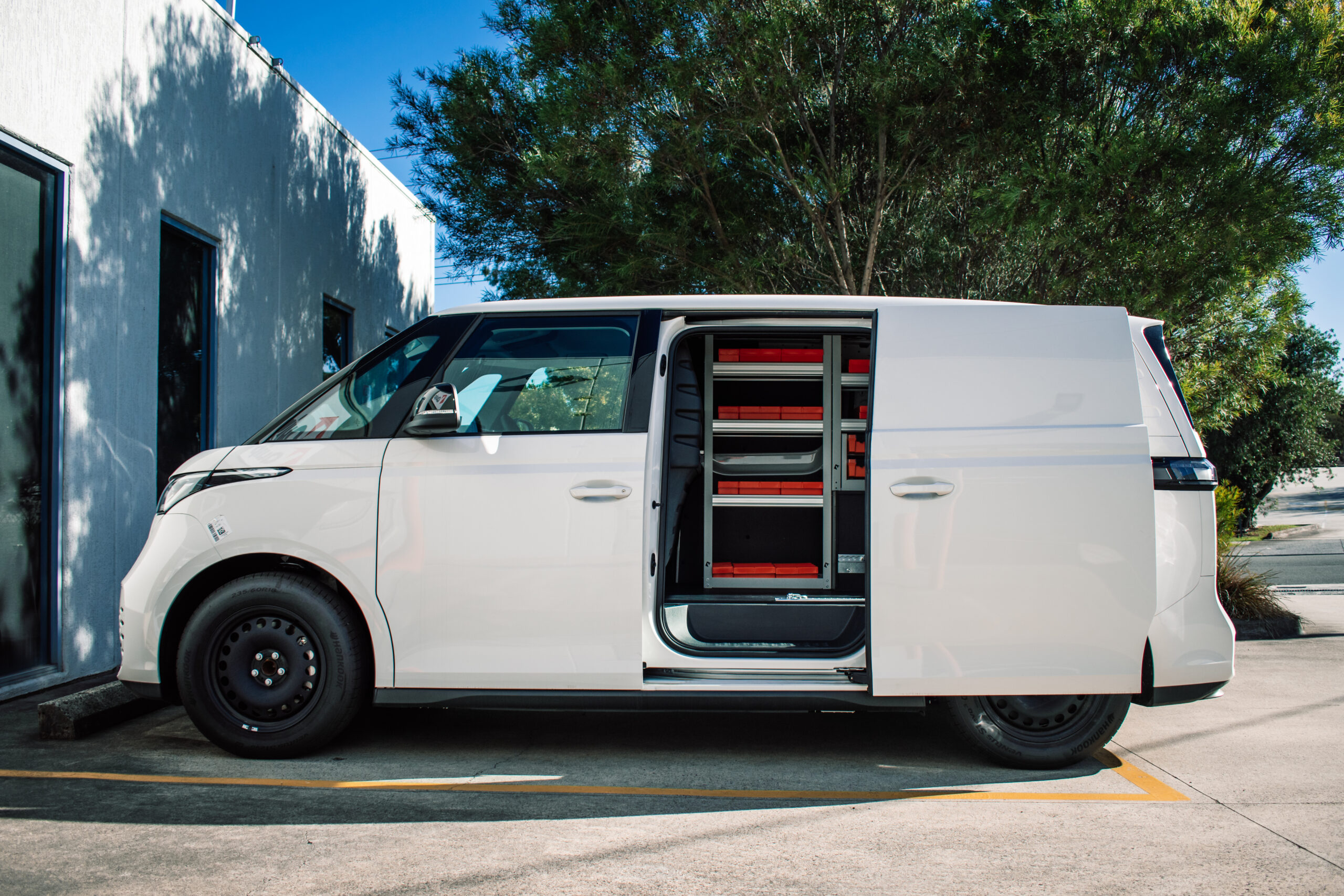
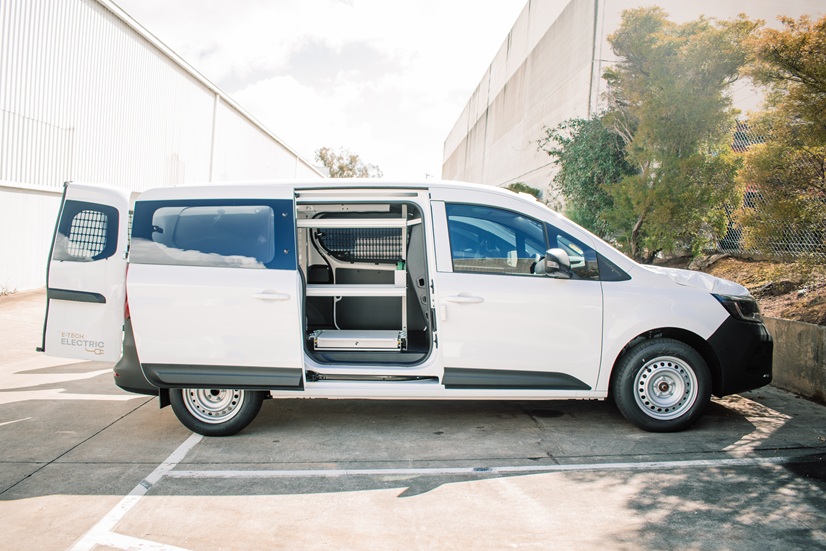
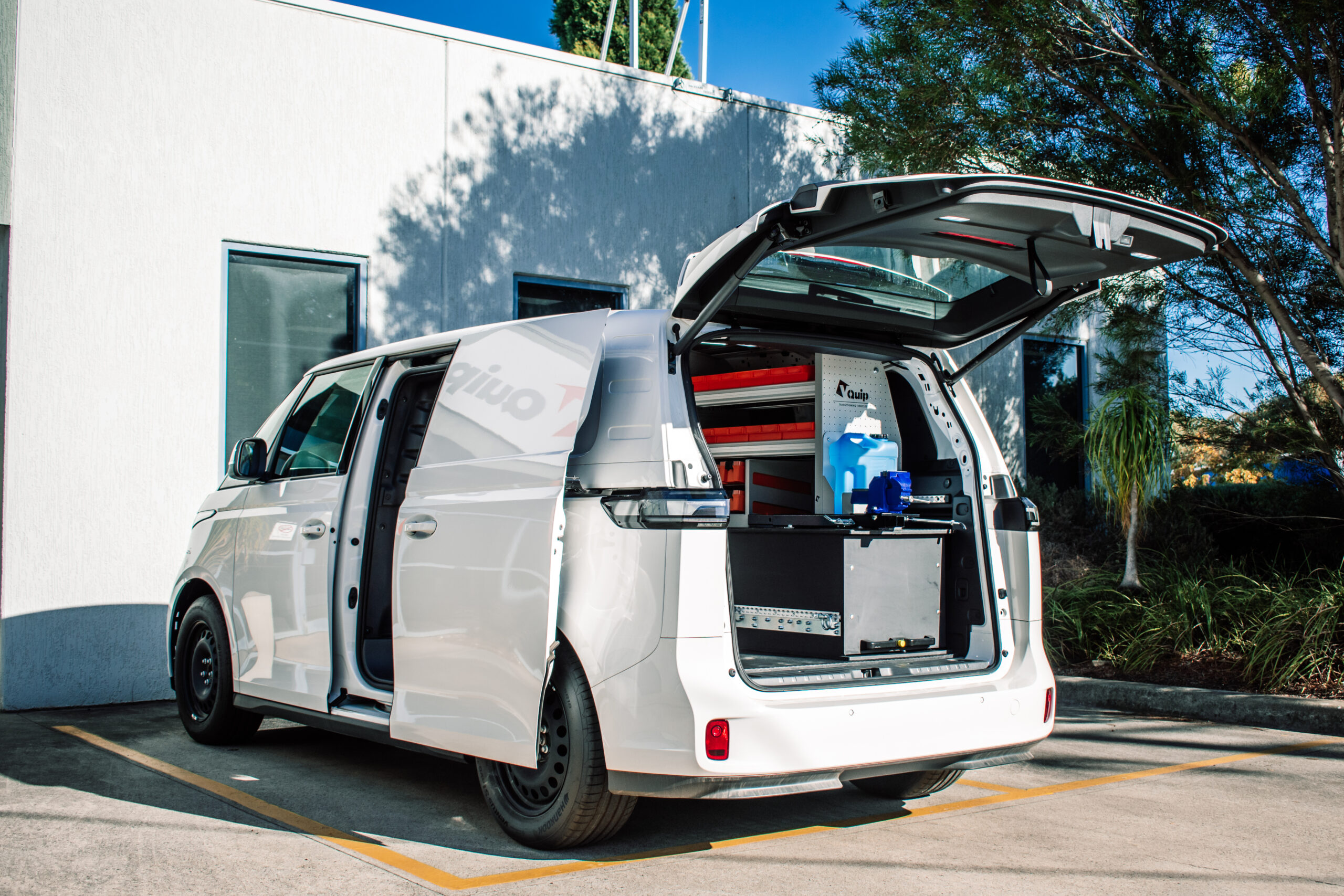
Electric vans can still be fitted out with shelving, drawers, and storage systems, but the weight of the fitout itself becomes more important.
Heavy cabinetry materials, steel drawer systems, and large roof racks can quickly consume the available payload.
For electric fleet vehicles, many organisations are now prioritising:
-
lightweight shelving systems
-
aluminium or composite materials
-
modular storage systems
-
simplified layouts that minimise unnecessary structure
The goal is to maintain technician productivity while keeping the total vehicle mass within safe operating limits.
For fleets operating hundreds of vehicles, even small weight reductions per vehicle can significantly increase available payload capacity across the fleet.
Charging Infrastructure for Fleets
One of the biggest differences between operating diesel and electric vans is the need for charging infrastructure.
For a single vehicle, charging can be straightforward. For a fleet, it requires planning.
Charging strategy typically depends on:
-
daily driving distance
-
overnight parking arrangements
-
vehicle downtime
-
electrical capacity at the depot
Most electric vans can recharge overnight using AC chargers, typically around 7 kW or 11 kW, which are sufficient for daily top-ups.
Fleets with tighter operating schedules may require faster charging or multiple charging points.
It is also important to consider the power capacity of the building or depot. In some cases, upgrading transformers or electrical infrastructure may be required to support multiple vehicles charging simultaneously.
Without proper planning, charging infrastructure can quickly become a bottleneck in fleet operations.
The Importance of Operational Planning
Electric vans can work very well for many fleet applications, particularly those with predictable daily driving distances and access to overnight charging.
However, successful adoption usually comes down to planning the entire system, not just choosing the vehicle.
Fleet managers should evaluate:
-
typical daily distance travelled
-
payload requirements
-
auxiliary equipment power needs
-
fitout weight
-
depot charging capacity
When these factors are considered together, electric vans can integrate effectively into many service and delivery fleets.
As vehicle technology continues to improve and charging networks expand, electric vans are likely to become an increasingly common part of commercial fleet operations.
The key is ensuring the vehicle, the fitout, and the infrastructure are designed to work together.