What Makes One Service Van Feel “Fast” to Work From?
Jul 13, 2026
It’s Not About Driving Speed. It’s About Technician Speed.
When fleet managers think about improving productivity, they often focus on the vehicle itself. Fuel economy, reliability, servicing costs and payload all play an important role.
But once the vehicle arrives on site, something else becomes far more important.
How quickly can your technician complete the job?
The difference between an average service van and a great one isn’t usually the engine under the bonnet. It’s how efficiently the technician can work from it.
At VQuip, we’ve worked with thousands of service vehicles across Australia, and one thing has become clear: the best service vans simply feel faster to work from. Every movement is easier, every tool is within reach, and every minute saved adds up over the life of the fleet.
Every Extra Movement Costs Time
Think about how many times a technician accesses their vehicle during a typical day.
- Retrieving tools
- Collecting spare parts
- Returning equipment
- Loading consumables
- Completing paperwork
- Packing up before leaving site
If each visit to the van involves searching for equipment, climbing over loose materials or moving items to access something at the back, those lost seconds quickly become lost minutes.
Across five or six jobs a day, hundreds of technicians and several years of fleet operation, those small inefficiencies become a significant hidden cost.
Good Layouts Follow the Technician’s Workflow
The fastest service vans aren’t necessarily the ones with the most storage.
They’re the ones where everything is positioned to match the technician’s daily workflow.
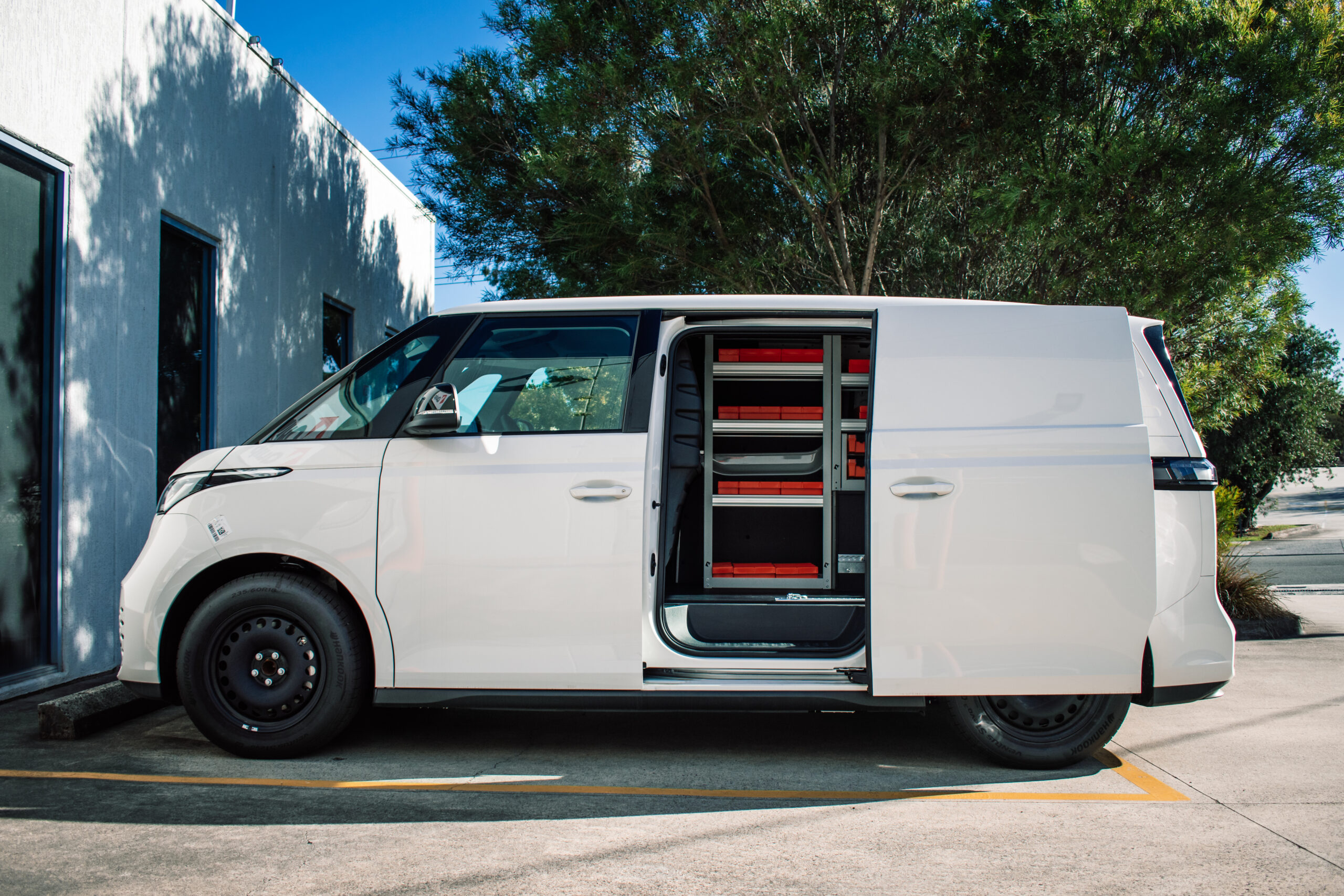
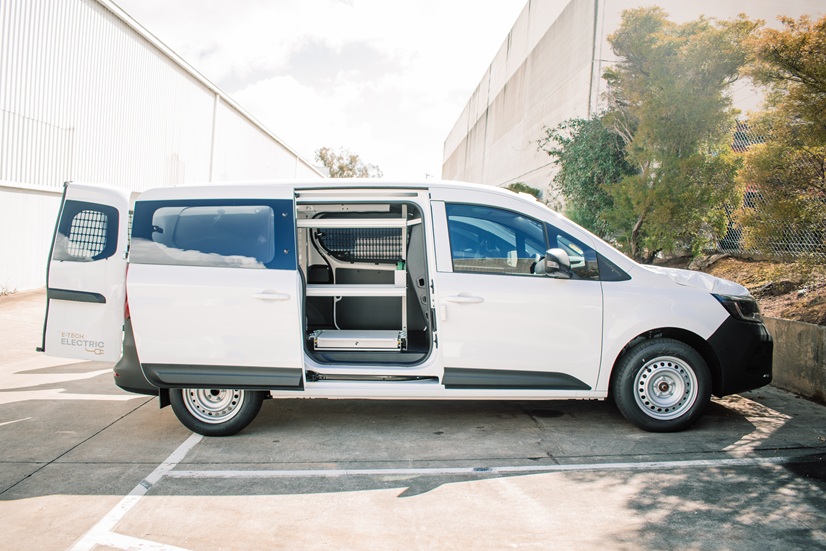
Frequently used items should be immediately accessible from the side or rear doors. Larger equipment can be stored deeper within the vehicle, while rarely used tools occupy higher shelves or less accessible locations.
Rather than asking the technician to adapt to the vehicle, the vehicle should be designed around how the technician actually works.
Organisation Reduces Decision Fatigue
An organised vehicle doesn’t just save walking or reaching.
It reduces thinking.
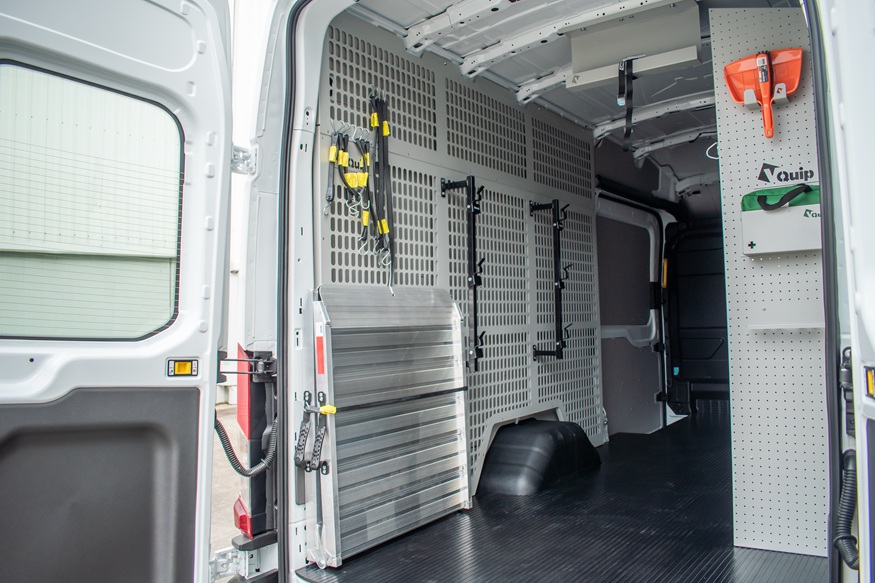
When every tool has a dedicated location, technicians instinctively know where to find it and where to return it. There’s no wasted time searching through tubs, moving equipment or wondering whether something has been left behind.
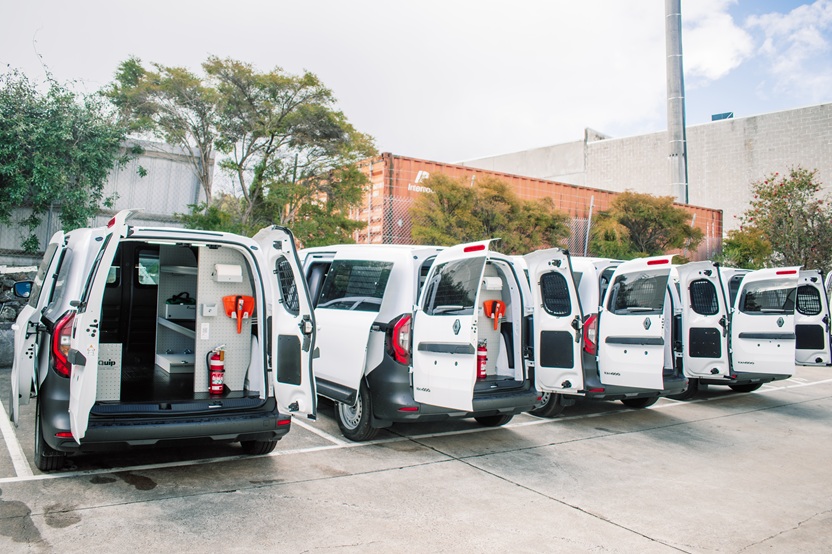
This consistency becomes even more valuable across larger fleets, where multiple technicians may use the same vehicle specification.
Easy Access Matters More Than You Think
One of the biggest productivity gains often comes from improving accessibility rather than adding more storage.
Examples include:
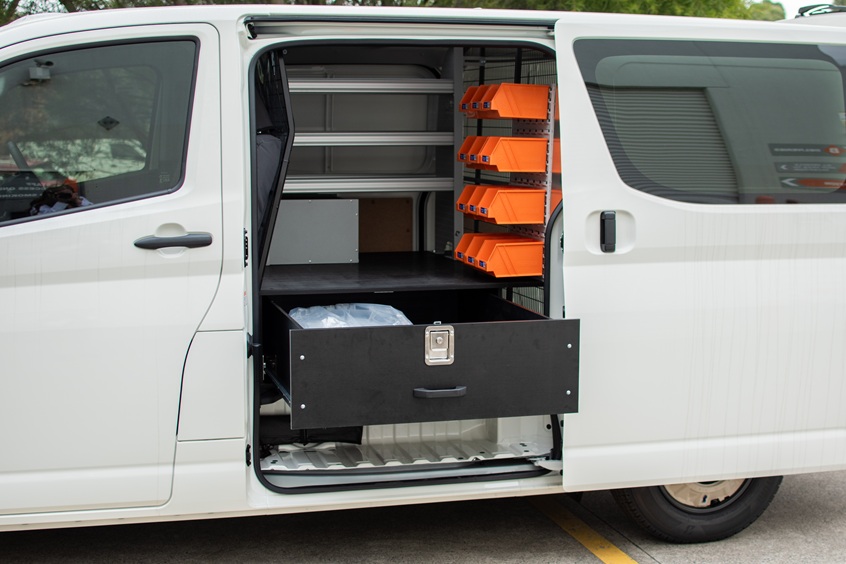
- Shelving positioned at comfortable working heights
- Frequently used tools located near sliding doors
- Drawers that eliminate kneeling into the vehicle
- Fold-down work benches for on-site assembly
- Carry case storage that can be removed in seconds
Each small improvement reduces unnecessary movement and allows technicians to stay focused on the task.
Weight Distribution Improves Daily Usability
A well-designed service van doesn’t just store equipment efficiently—it carries it efficiently.
Poorly distributed weight can affect handling, braking and suspension performance, making the vehicle less comfortable and more fatiguing to drive.
Thoughtful fitout design considers payload limits, axle loads and the location of heavier equipment so the vehicle remains balanced and predictable throughout the working day.
The result is a vehicle that’s not only safer but also more enjoyable to operate.
Standardisation Builds Familiarity
For organisations operating multiple vehicles, consistency can be one of the biggest productivity gains available.
When every technician steps into an identical layout:
- Tools are always in the same location.
- New staff require less familiarisation.
- Equipment is easier to replenish.
- Vehicles can be swapped without affecting productivity.
- Fleet managers can simplify training and inventory management.
This is one of the reasons many national fleets are moving towards standardised vehicle specifications wherever practical.
Small Improvements Deliver Big Results
Few productivity gains come from a single major change.
Instead, they’re achieved through dozens of small improvements working together:
- Better storage placement
- Easier access
- Reduced searching
- Improved visibility
- Logical organisation
- Cleaner workflows
- Consistent layouts
Each improvement may save only a few seconds, but together they create a service vehicle that simply feels quicker to work from every day.
The Bottom Line
A productive service van isn’t measured by how much equipment it can carry.
It’s measured by how efficiently a technician can complete their work.
When every tool is where it’s expected, every movement has been considered and every part of the fitout supports the technician’s workflow, the entire vehicle becomes a productivity tool rather than just a means of transport.
For fleet operators, that’s where the real return on investment comes from—not simply fitting out a vehicle, but creating one that helps technicians work faster, safer and more efficiently on every job.