What Renewable Energy Fleets Need from a Vehicle Fitout
Apr 17, 2026
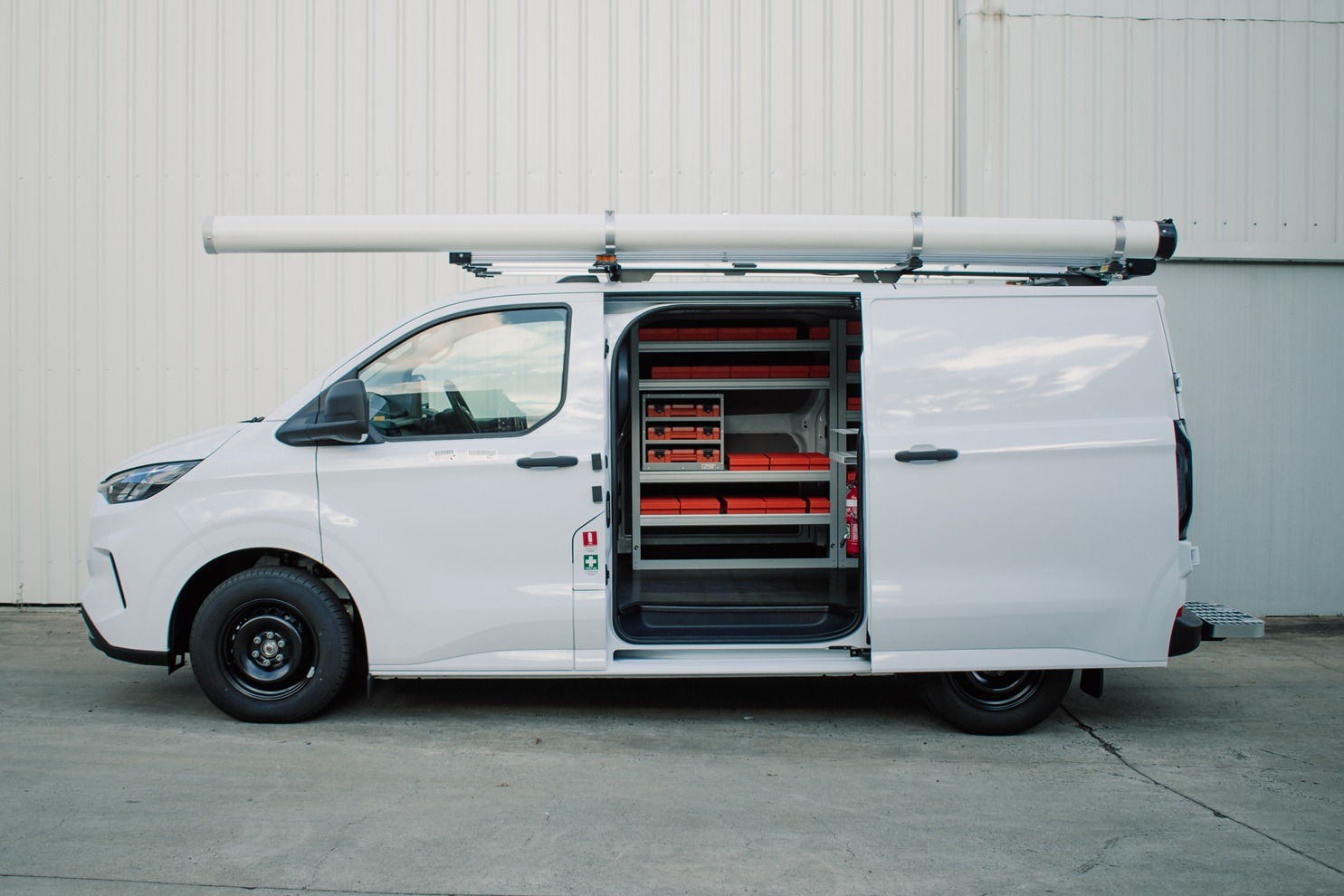
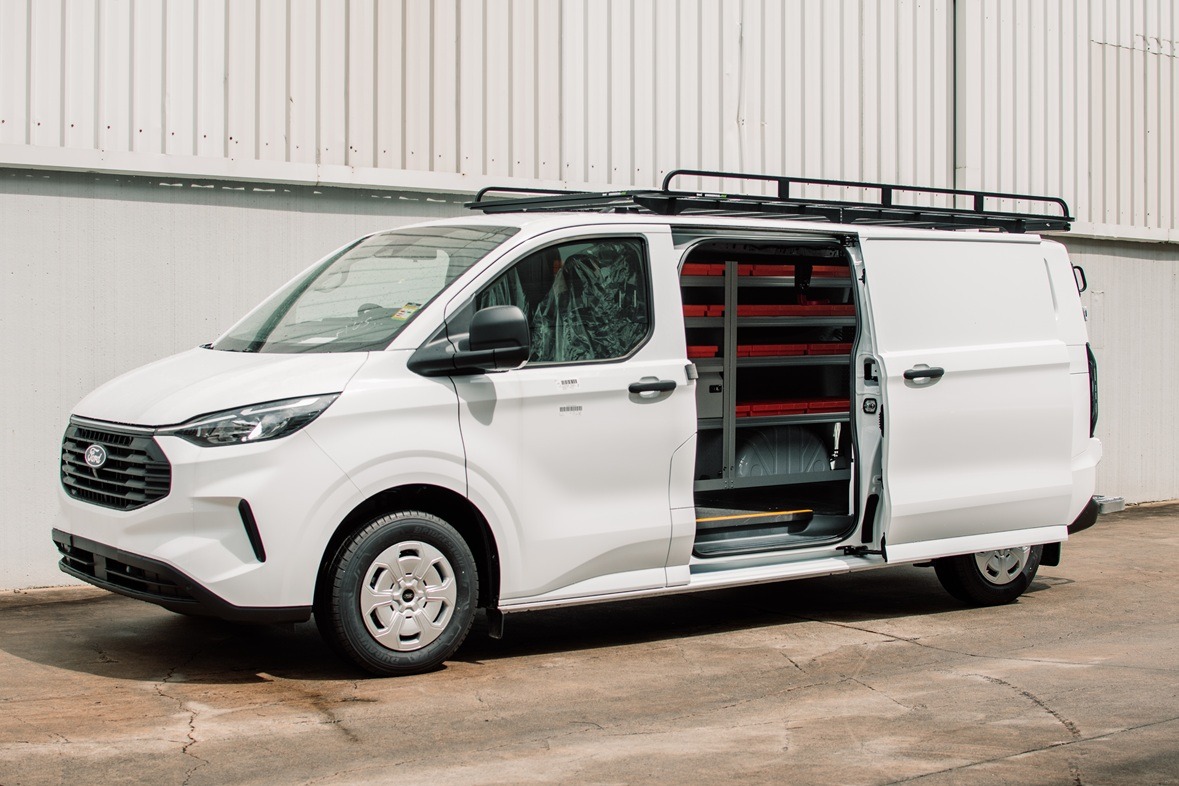
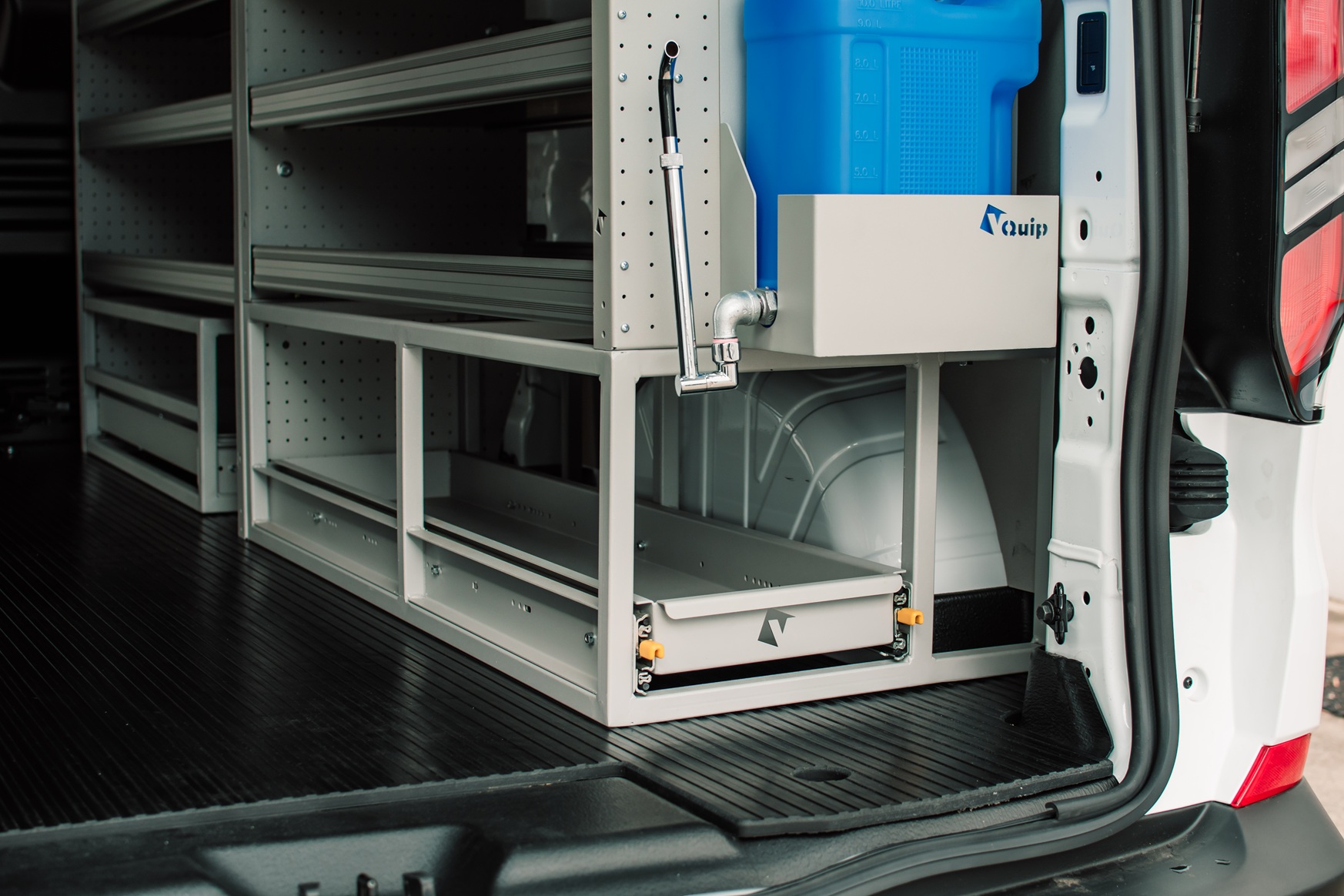
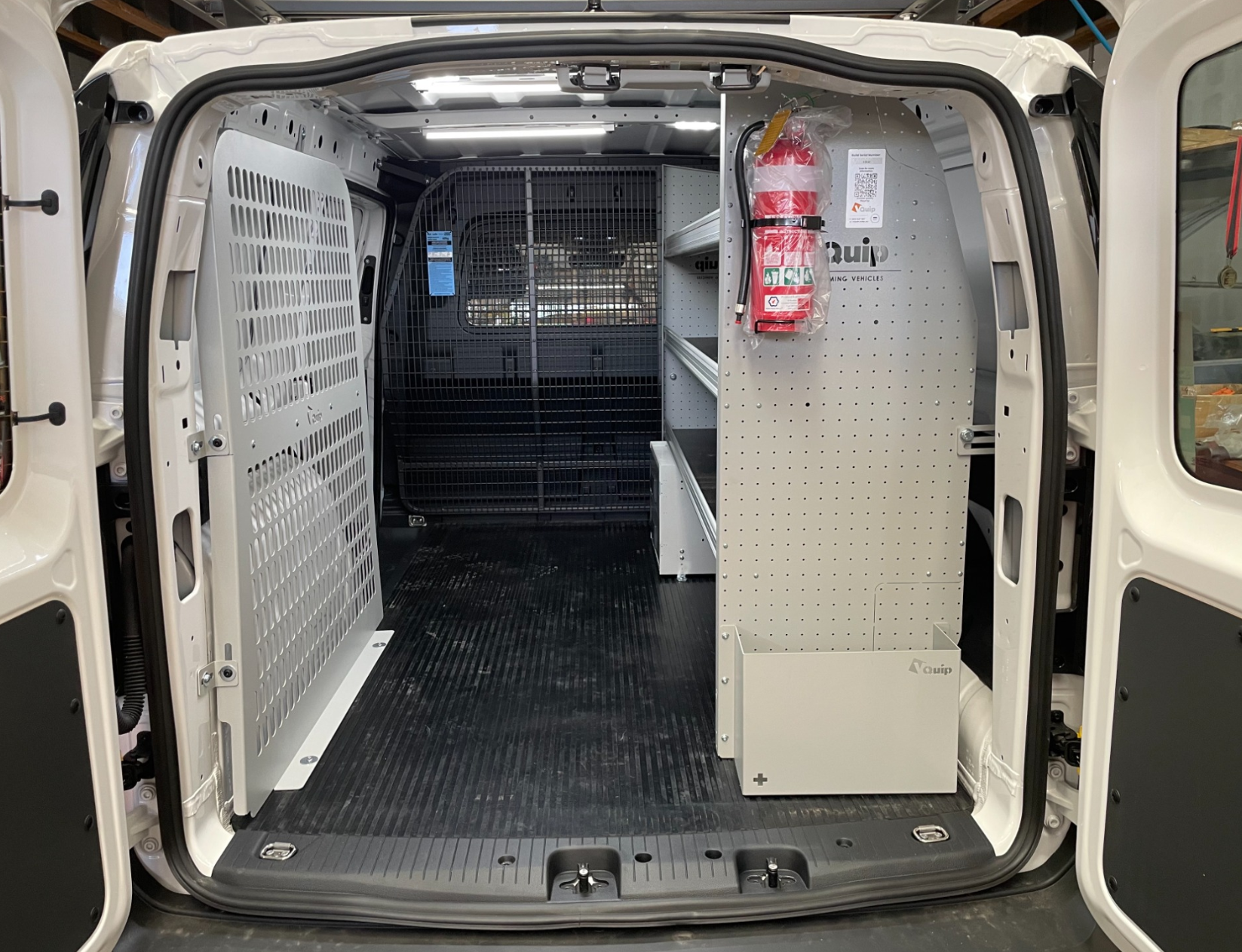
At a glance, a renewable energy service vehicle might look no different to any other trade van. Shelving, some storage, maybe a roof rack — job done.
But speak to the technicians using these vehicles every day, and a different picture emerges.
Renewable energy fleets operate in a unique space. They sit somewhere between electrical, construction, and service work. Install one day, fault-find the next, and maintain systems across multiple sites in between. That complexity places very different demands on how a vehicle needs to function.
And it is exactly where many standard fitouts fall short.
The Reality: These Are Not Single-Purpose Vehicles
One of the biggest misconceptions is treating renewable energy vehicles as single-purpose setups.
In reality, most fleets are running mixed-use vehicles:
- Solar installation and commissioning
- Battery system installs and upgrades
- Ongoing servicing and fault diagnostics
- Emergency call-outs
Each of these tasks requires a different combination of tools, parts, and equipment.
A van set up purely for installation often becomes inefficient for service work. A service-focused layout may not carry what is needed for larger install jobs.
The result is compromise. And over time, that compromise shows up in lost productivity.
A well-designed fitout needs to support this dual role without forcing technicians to constantly adapt or work around the vehicle.
Constant Movement Between Sites Changes Everything
Unlike workshop-based trades, renewable energy technicians are rarely in one place for long.
A typical day might involve:
- Multiple residential solar jobs
- A commercial system inspection
- A reactive call-out in the afternoon
That means the vehicle effectively becomes a mobile workspace, warehouse, and transport hub all in one.
In this environment:
- Access speed matters
- Organisation matters
- Layout consistency matters
If a technician needs to stop and search for parts at every job, those minutes add up quickly across a week. Multiply that across a fleet, and the cost becomes significant.
Fitouts that work in static environments often break down under this level of movement.
Tool, Parts, and Documentation Management Is More Complex Than It Looks
Renewable energy work involves more than just tools.
Technicians are typically carrying:
- Electrical tools and test equipment
- Solar components and fixings
- Cabling and connectors
- Spare parts for service work
- Compliance documentation and job records
Without a clear system, these items compete for space.
This is where many setups fail. They focus on “storage” rather than structured organisation.
The difference is important.
Good organisation means:
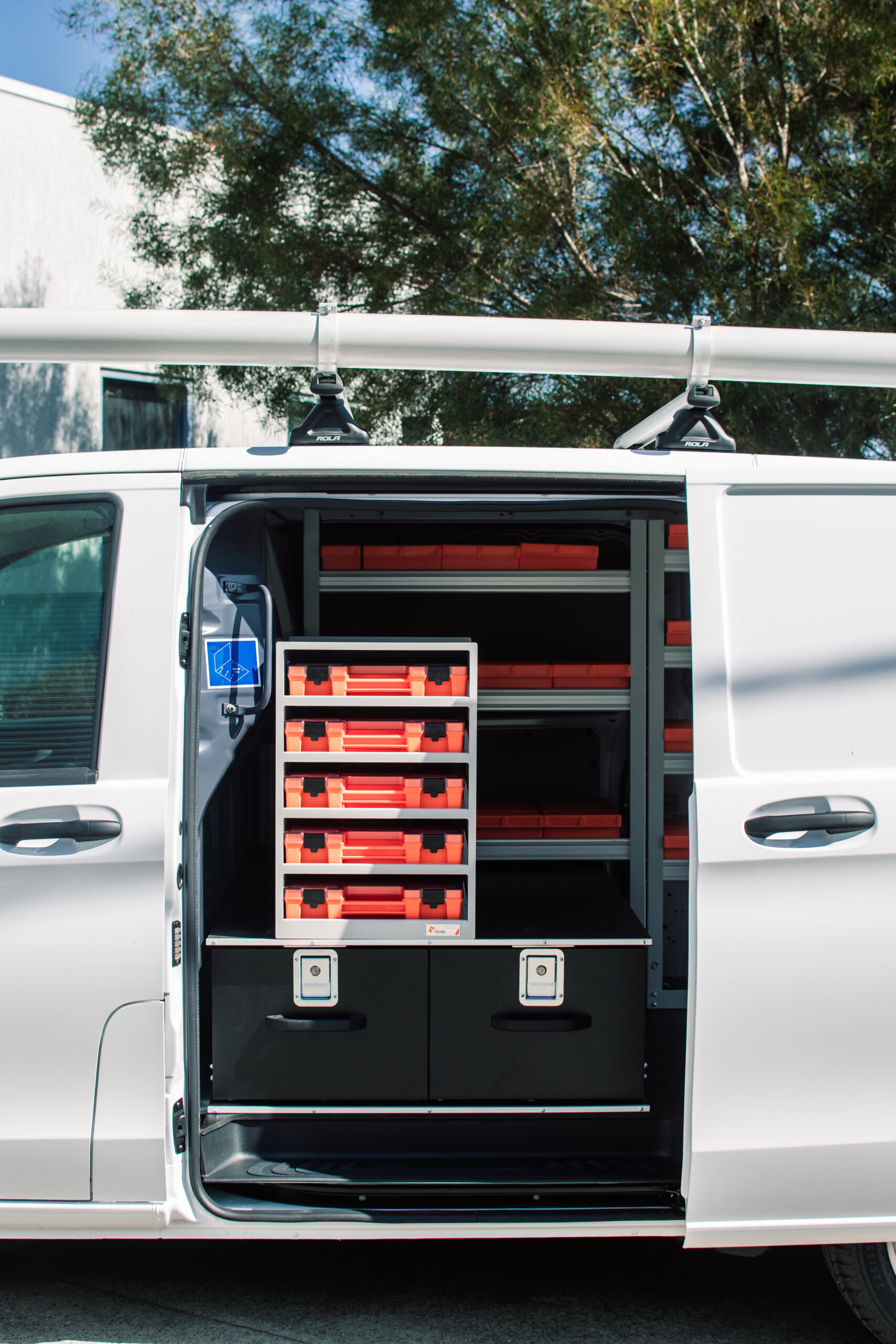
- Frequently used tools are immediately accessible
- Parts are visible and easy to restock
- Equipment is secured but not buried
- Documentation is protected and easy to retrieve
Poor organisation leads to:
- Time lost searching
- Forgotten or duplicated parts
- Increased risk of damage to equipment
- Frustration for technicians
Over time, technicians will often create their own workarounds — which usually leads to inconsistency across the fleet.
The Hidden Cost: Downtime You Don’t See on a Spreadsheet
Most businesses measure downtime in obvious ways — vehicles off the road, delays in scheduling, or missed jobs.
But a large portion of downtime in renewable energy fleets is far less visible.
It shows up as:
- Extra time spent on-site
- Return visits due to missing parts
- Delays between jobs
- Reduced number of jobs completed per day
Individually, these seem minor. Collectively, they have a real impact on fleet performance.
For example:
- If a technician loses 10–15 minutes per job due to poor organisation
- Across 3–4 jobs per day
- Across a fleet of vehicles
The lost time quickly becomes measured in hours, not minutes.
And unlike labour or fuel, it is rarely tracked directly.
Where Typical Fitouts Fall Short
Many standard vehicle fitouts are designed around general trade use. They are often:
- Too rigid for mixed-use work
- Not optimised for frequent movement between jobs
- Focused on storage capacity rather than accessibility
- Lacking consideration for how technicians actually work day-to-day
They may look organised when first installed, but they do not always hold up under real operating conditions.
This is why fleets often end up modifying vehicles after delivery — adding extra storage, moving components, or changing layouts to suit real-world use.
What Renewable Energy Fleets Actually Need
To perform effectively, fitouts need to be designed around how these vehicles are used, not just what they carry.
That typically means:
1. Flexibility within a structured layout
The ability to support both installation and service work without constant reconfiguration.
2. Fast, logical access to tools and parts
Reducing time spent searching and improving job efficiency.
3. Clear separation of equipment types
Tools, parts, and documentation each have defined spaces.
4. Secure storage for sensitive equipment
Test gear, batteries, and electrical components need protection in transit.
5. Consistency across the fleet
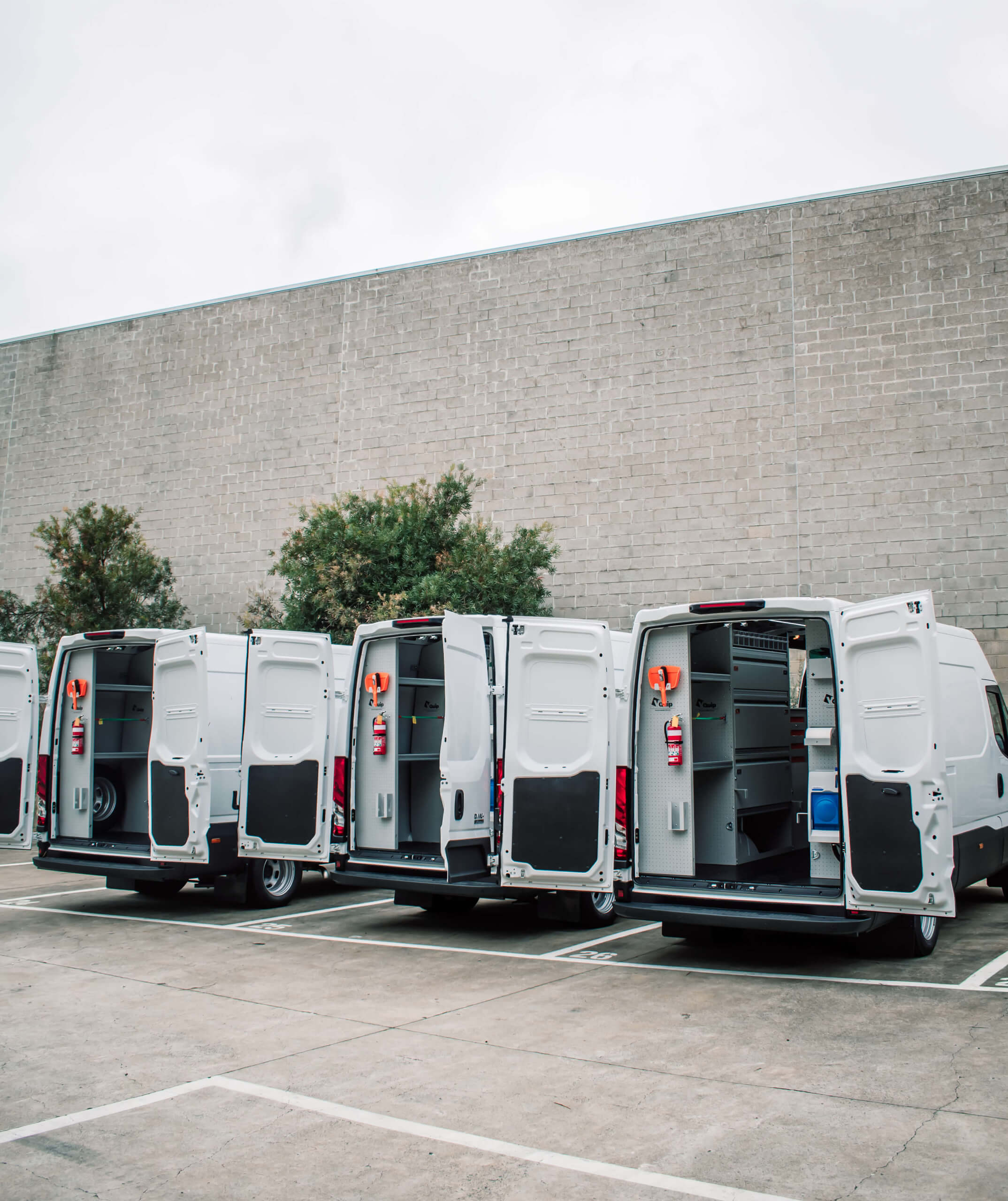
So technicians can move between vehicles without relearning layouts.
The Bottom Line
Renewable energy fleets are growing quickly, and with that growth comes increasing pressure on efficiency, consistency, and technician performance.
The vehicle is not just transport — it is a critical part of how work gets done.
Fitouts that don’t account for the realities of mixed-use work, constant movement, and complex equipment demands will eventually slow a fleet down.
And often, that impact is only recognised after the vehicles are already on the road.
Getting the setup right from the start is not just about organisation. It is about enabling technicians to work efficiently, safely, and consistently — every day, across every job.