Just How Much Does Vehicle Choice Impact Fitout Design?
Mar 4, 2026
When fleets order new service vehicles, the conversation usually starts with the vehicle itself. Brand preference, fuel efficiency, leasing arrangements and driver comfort tend to dominate the early discussions.
But one important factor is often considered later than it should be: how the vehicle will actually function once it becomes a mobile workspace.
In practice, the choice of vehicle has a direct impact on what type of fitout can be installed, how efficiently technicians can work from the vehicle, and how much equipment it can safely carry. Selecting a vehicle first and then trying to design the fitout around it can sometimes lead to compromises that affect usability.
Understanding a few key vehicle characteristics early in the process can help ensure the vehicle and the fitout work together as a complete system.
Access: Why Door Configuration Matters
One of the first factors that influences fitout design is simply how technicians enter and access the cargo area.
Modern vans can be configured with different door arrangements, including single or dual sliding doors and different rear door options. While this might seem like a minor specification detail, it can have a significant effect on how the internal storage layout is designed.
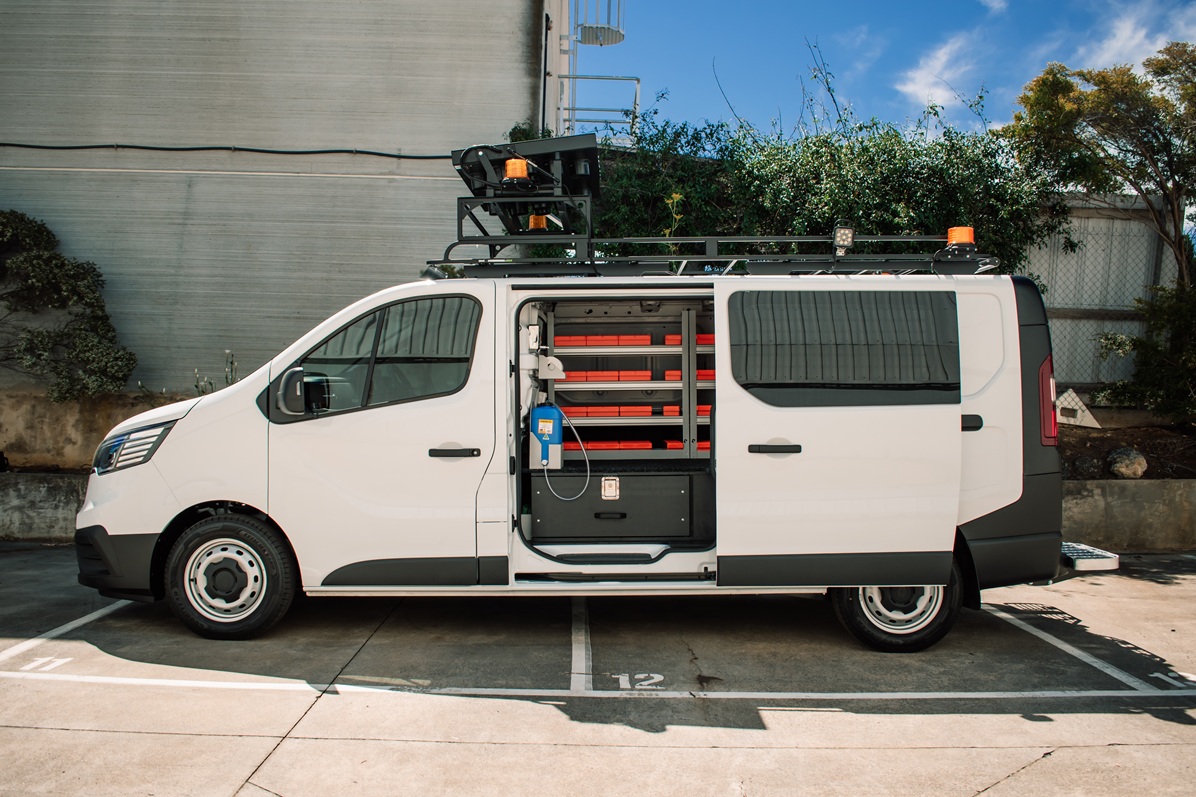
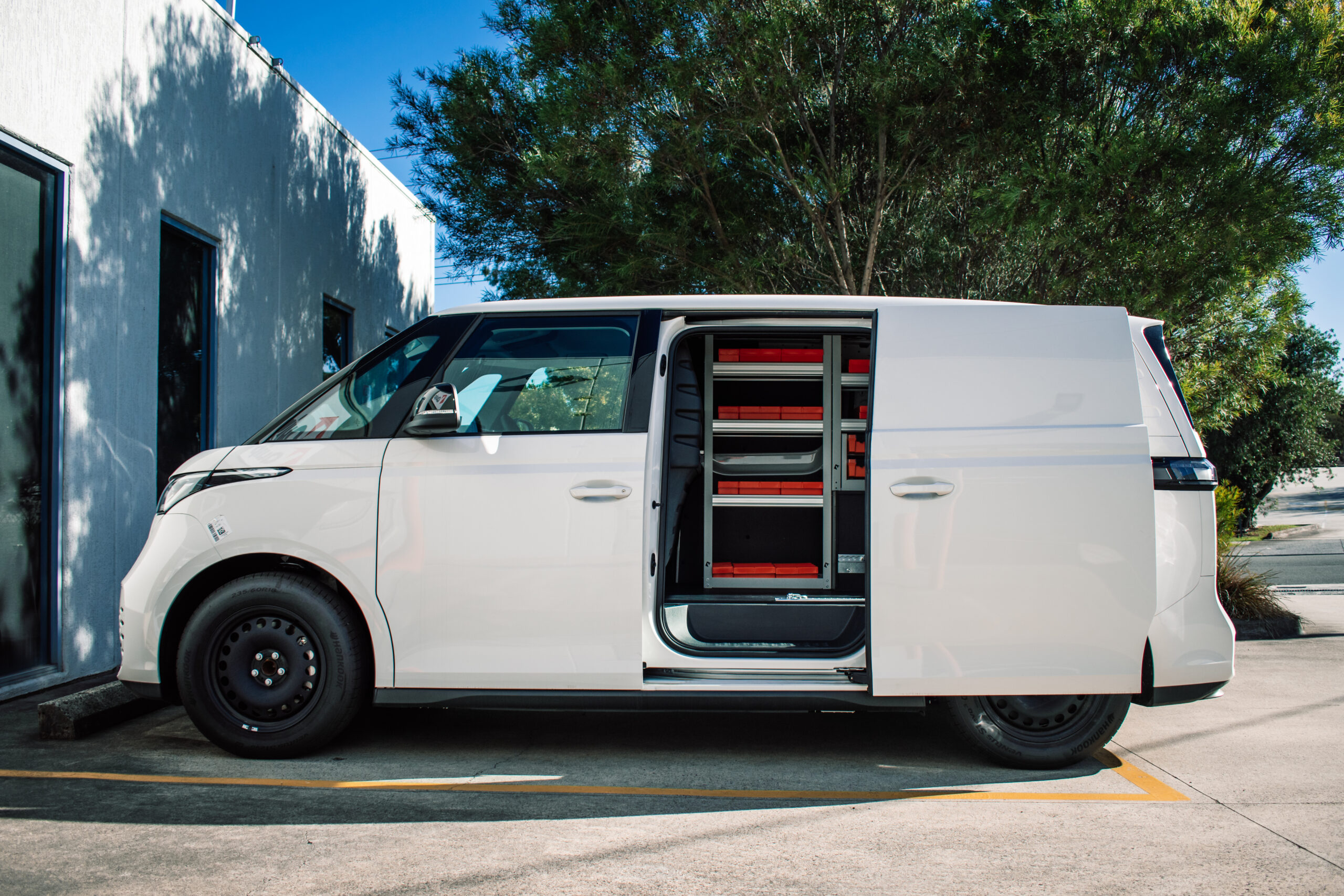
For example, a van with dual sliding doors allows technicians to access shelving or storage from either side of the vehicle. This can be particularly useful in urban environments where vehicles are often parked on busy streets and access from one side may be restricted.
In contrast, vans with a single sliding door require shelving and storage systems to be designed so that frequently used tools and parts remain accessible from that single entry point.
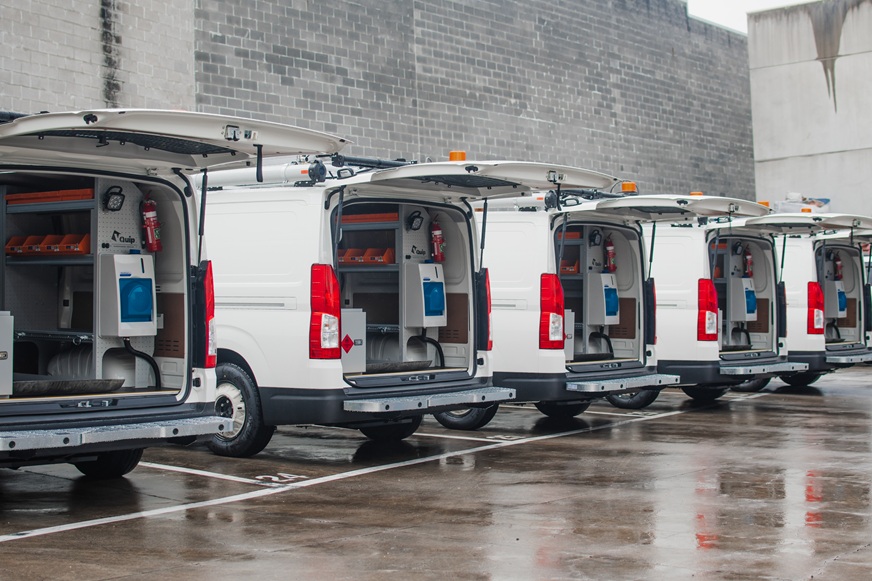
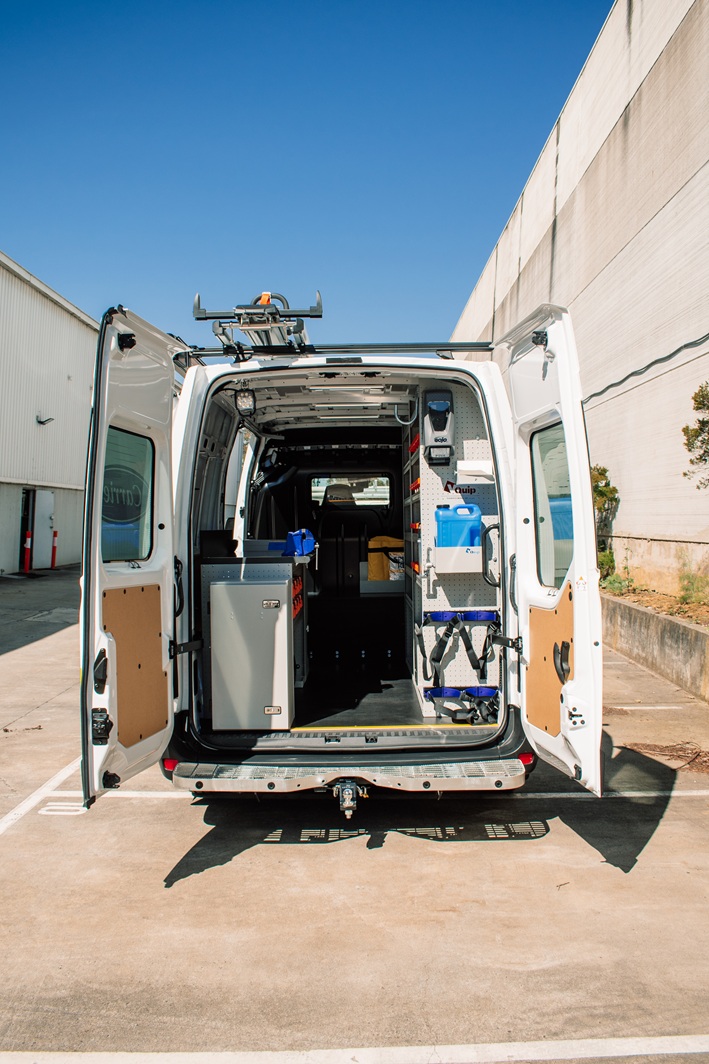
Rear door configuration also matters. Barn doors typically allow better access for loading long items such as ladders or conduit, while tailgates can limit access height when parked close to buildings or in confined areas.
These access considerations often shape the entire layout of shelving, drawers and equipment storage inside the van.
Cargo Dimensions and Usable Space
Even vehicles that appear similar in size externally can have quite different cargo area dimensions.
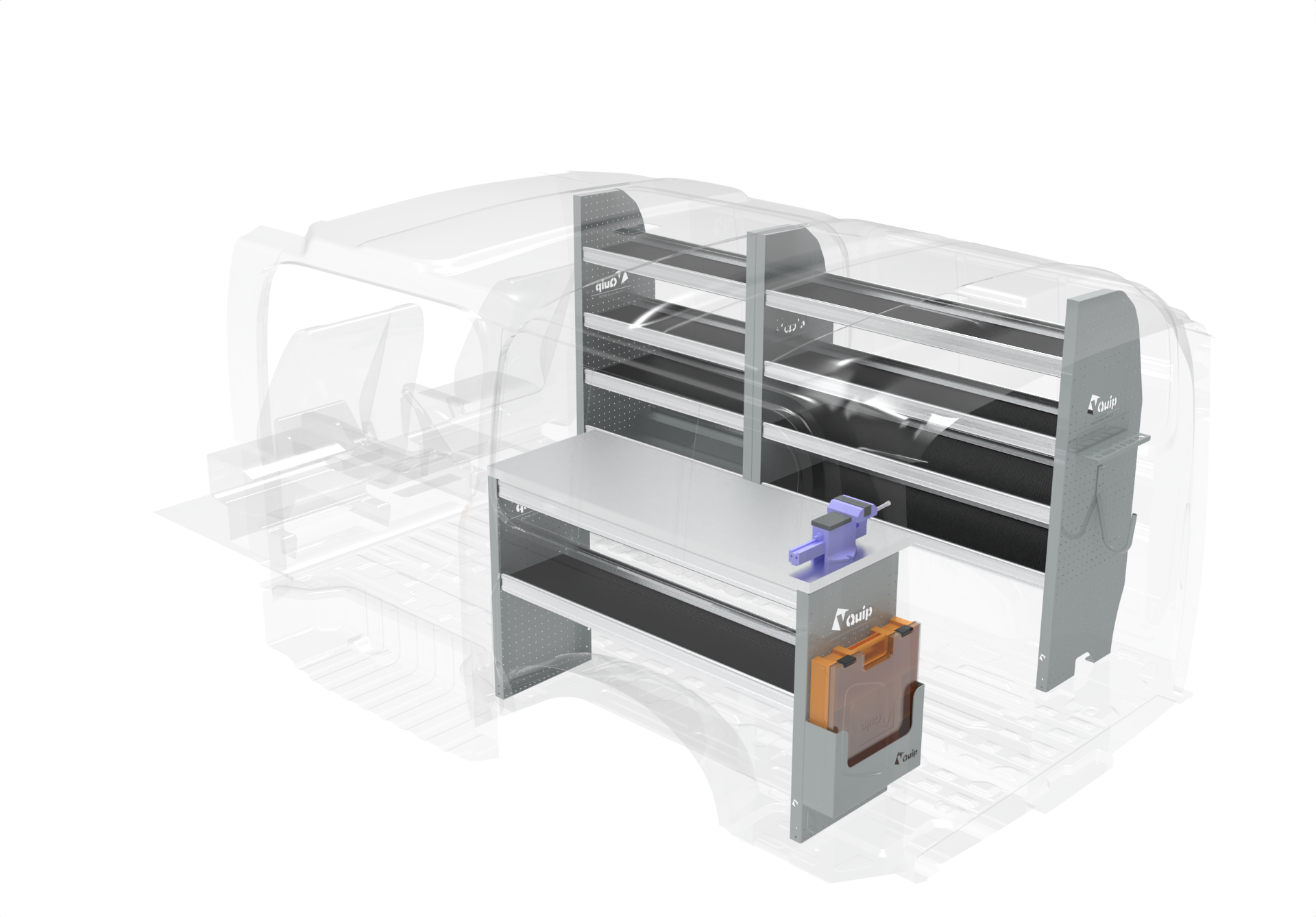
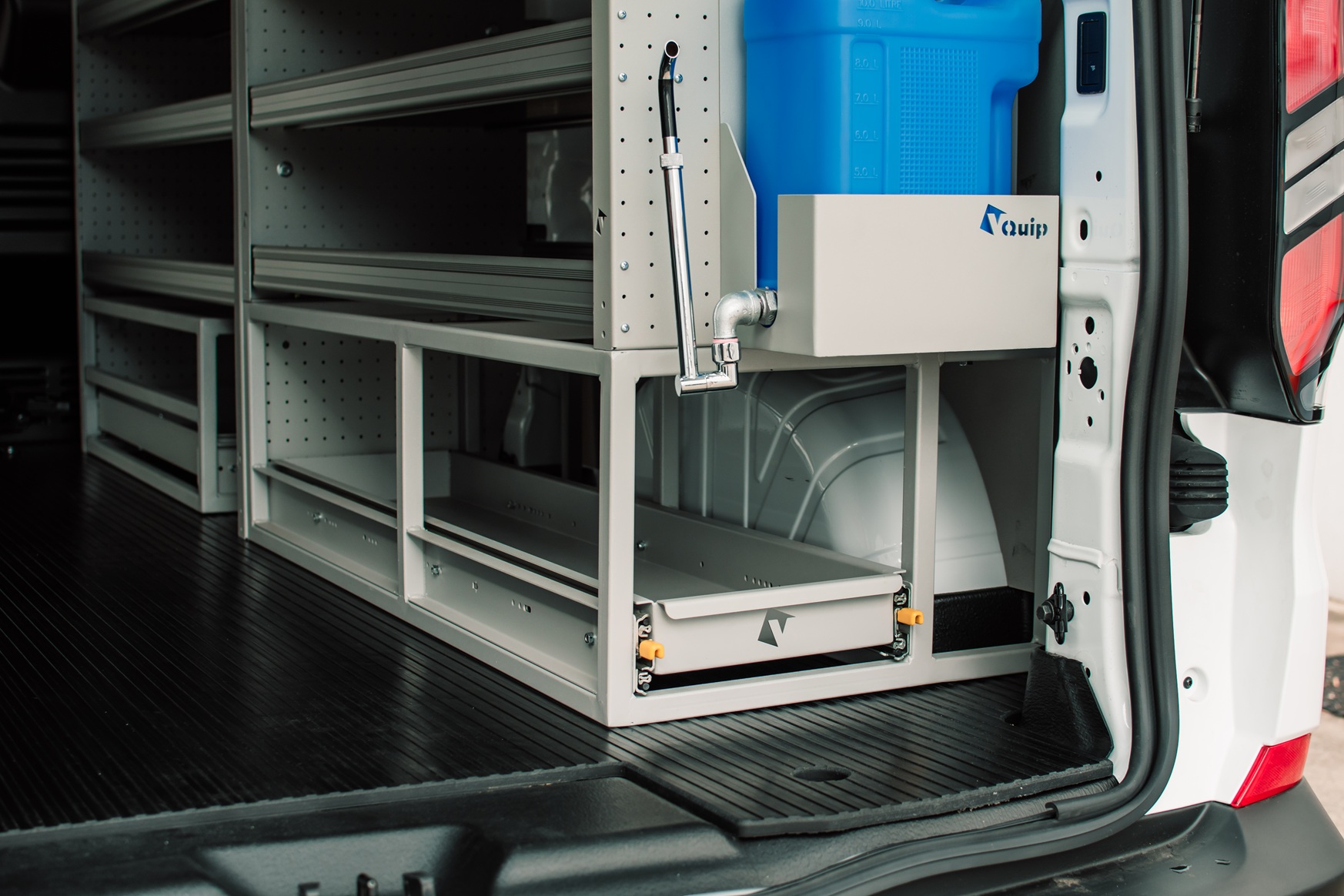
Small variations in cargo length, width and interior height can influence how shelving systems and storage units are configured. Wheel arch intrusion, for example, can reduce usable floor width and affect whether certain drawer systems or equipment cases will fit between the arches.
Interior height can also vary significantly between models and roof configurations. Higher roof vans may allow technicians to stand more comfortably inside the vehicle, while lower roof models require shelving and storage to be positioned carefully to maintain usable working space.
Because of these differences, fitout components such as shelving systems and drawer units often need to be designed specifically for each vehicle platform rather than applied as a universal solution.
Wheel Arch Spacing and Storage Layout
Wheel arch spacing is another detail that can influence the way equipment is stored.
The distance between wheel arches determines whether floor-mounted drawer systems can span the full width of the vehicle, or whether storage needs to be positioned above the arches. It also affects whether large tool cases or standard storage boxes can be loaded directly onto the floor.
In some vans, the spacing allows pallets or equipment cases to fit neatly between the arches. In others, the reduced width means shelving systems must be designed to accommodate the limited floor space.
These measurements might seem minor, but they can make a noticeable difference to how efficiently storage space is used.
Payload Capacity and Weight Management
Another critical consideration is payload capacity.
Every vehicle has a Gross Vehicle Mass (GVM), which represents the maximum allowable weight of the vehicle including passengers, tools, equipment and the installed fitout. Different variants of the same model can have significantly different payload capacities depending on factors such as wheelbase, drivetrain and trim level.
Fitout components themselves also add weight. Shelving systems, drawer units, partitions, roof racks and equipment mounts all contribute to the overall load.
If payload capacity is not considered early in the design process, it is possible for a completed vehicle to approach or exceed its allowable weight limit once tools and materials are added.
Careful planning ensures the fitout design remains within safe operating limits while still providing sufficient storage capacity for technicians.
Internal and External Vehicle Height
Vehicle height is another factor that deserves careful consideration.
Internally, cargo area height affects whether technicians can comfortably stand and move around inside the vehicle. In many service applications, technicians regularly step into the cargo area to retrieve tools or organise equipment. If the internal height is too low, this can result in frequent bending or crouching throughout the day.
Higher roof vehicles can improve ergonomics by allowing technicians to move more freely and by providing space for additional shelving tiers. This can increase the total storage capacity of the vehicle.
However, external height must also be considered.
Many fleet vehicles operate in city environments where they regularly enter underground car parks, shopping centres, hospitals and other buildings with restricted height clearance. When roof racks, ladder carriers or other rooftop equipment are added, the total height of the vehicle can increase significantly.
For fleets working in urban areas, selecting a vehicle that balances internal workspace with practical external height can prevent access issues later on.
Electric and Hybrid Vehicle Considerations
As more fleets transition to electric or hybrid vehicles, additional design considerations are starting to influence fitouts.
Electric vans often have battery packs located beneath the cargo floor, which can affect payload capacity and vehicle weight distribution. Electrical integration can also differ from traditional diesel vehicles, particularly when auxiliary systems such as inverters or additional battery systems are required to power equipment.
In some cases, auxiliary electrical systems must be carefully designed so they operate independently of the vehicle’s high-voltage drivetrain.
As fleets continue adopting electric platforms, coordination between vehicle selection and fitout design will become increasingly important.
Designing the Vehicle and Fitout Together
A well-designed service vehicle is not simply a van with shelving added afterwards. The most effective mobile workspaces are created when vehicle selection and fitout design are considered together from the beginning.
By understanding how factors such as door configuration, cargo dimensions, wheel arch spacing, payload capacity and vehicle height influence fitout design, fleets can ensure the final vehicle supports the way technicians actually work.
When these elements are aligned, the result is a vehicle that functions as an efficient mobile workspace and delivers long-term value over the life of the fleet.