Landscaping van fitouts that keep tools locked away and ready to use
A landscaping crew might mow and edge a property in the morning, trim hedges at the next stop and finish the day with a load of green waste. By then, the van may be carrying wet clippings, muddy boots and thousands of dollars’ worth of equipment. A well-planned fitout gives each of those things a place and makes it easier to get straight to work at the next site.
Why choose a van for landscaping?
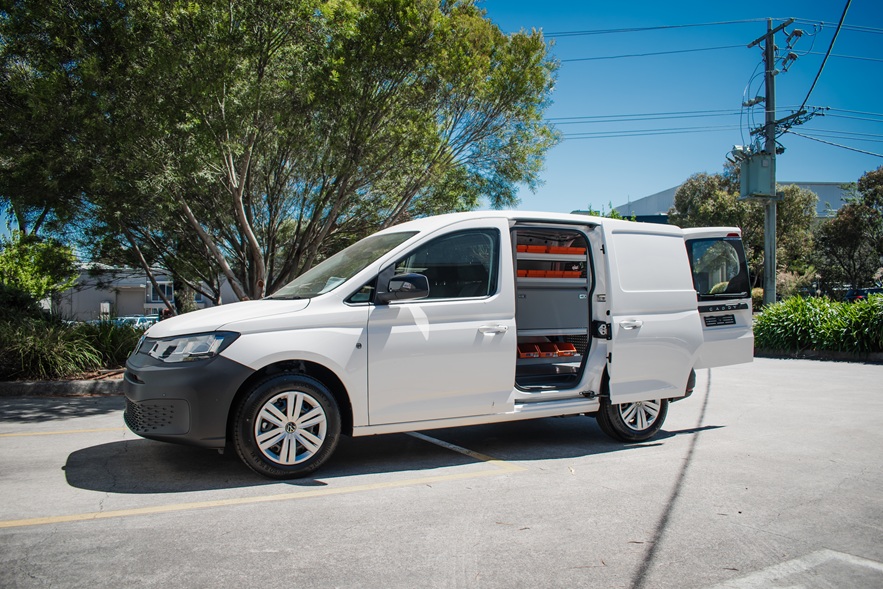
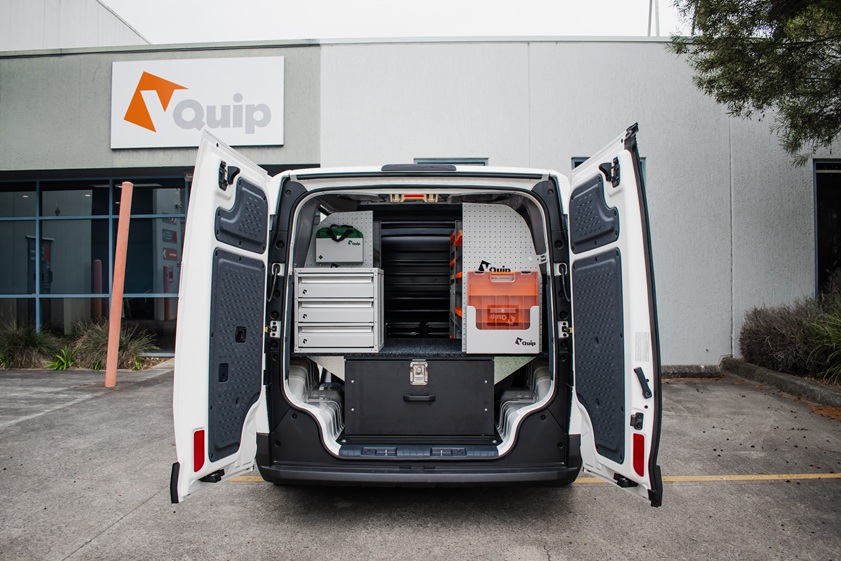
Tools carried on an open ute tray are visible and exposed to rain, sun and road grime. An enclosed van gives crews a load area they can lock between jobs. A solid-sided cargo area keeps mowers, blowers and power tools out of sight, while the roof and doors provide shelter when the weather turns. An internal lockable compartment can add another layer of security for higher-value items such as cordless tools and spare batteries.
A van also gives you two ways to access the load area. A side door can put everyday tools within easy reach, while the rear doors can serve as the loading point for bulky equipment and green waste.
Use the walls for whipper snippers, hedgers and hand tools
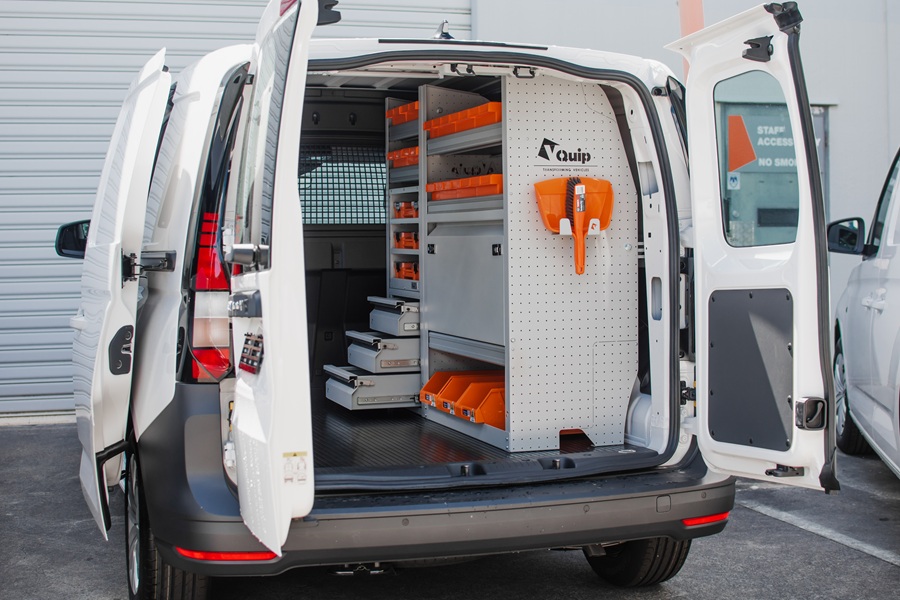
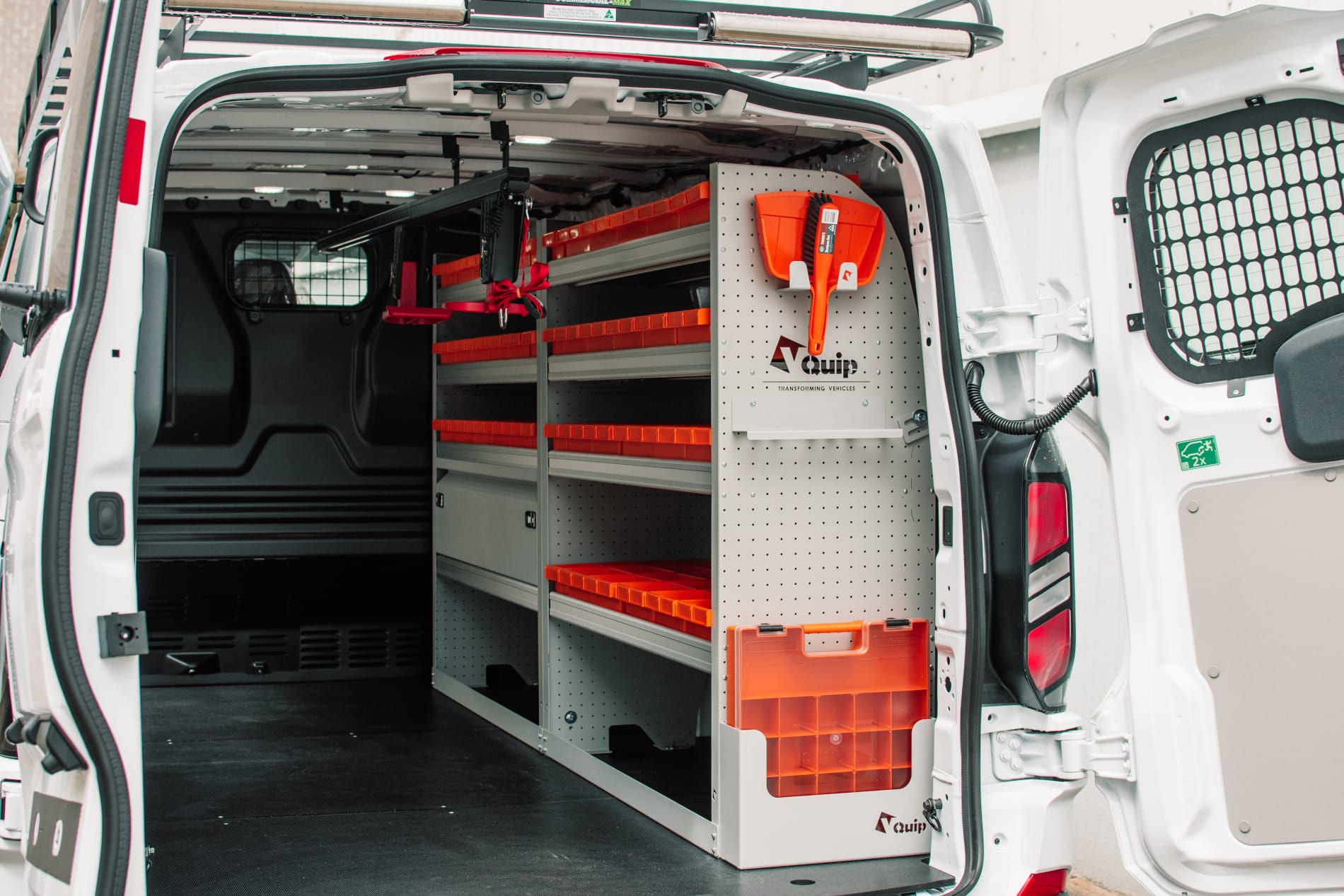
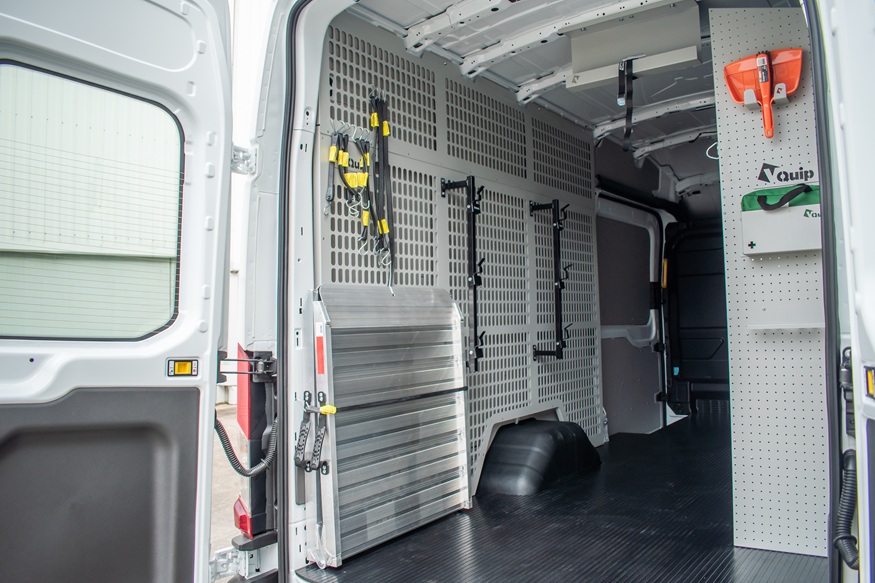
Mesh wall panels give you a place to mount compatible hooks, brackets and tool holders. Dedicated restraints for whipper snippers and hedge trimmers keep long tools off the floor and give each one a consistent spot. Rakes, shovels and brooms can have their own holders, leaving the centre aisle clear for bulky gear.
Think about where you stand when you unload. If the crew usually works from the sliding door, position frequently used tools within reach of that opening. Check there’s enough room to lift a long tool out of its holder without hitting the door frame or neighbouring equipment.
Give green waste its own space
A lidded, removable tub near the rear doors works well for grass clippings and small hedge trimmings. A larger removable bin or lined compartment can suit crews that regularly carry more cuttings. Keeping waste in a dedicated area helps contain dirt and moisture and makes it easier to unload and clean up at the end of the day.
An easy-clean cargo floor is worth considering, especially if mowers and tools regularly come back wet. Keep gloves, spare trimmer line and other clean supplies in closed drawers or bins away from the waste area.
Plan the floor around the mower and the heaviest load
Start with the largest mower or piece of equipment the van needs to carry. Allow room to load it through the rear doors, secure it in transit and still reach the items you need during the day. Plan dedicated restraints and tie-down points for the mower, waste containers and other bulky gear. For heavier equipment, consider how a loading ramp would work at the sites where the crew parks.
Work through payload when choosing the van and fitout. The fitout, crew, equipment, supplies and green waste all contribute to the vehicle’s loaded weight. Use a realistic end-of-day load in that calculation, especially if the crew regularly carries wet clippings or stocks up on materials between jobs.
Build the layout around a normal workday
At VQuip, we start with what your crew carries, what they unload at each stop and what comes back dirty or wet. That helps determine where the mesh panels, tool holders, mower storage and green waste area should go.
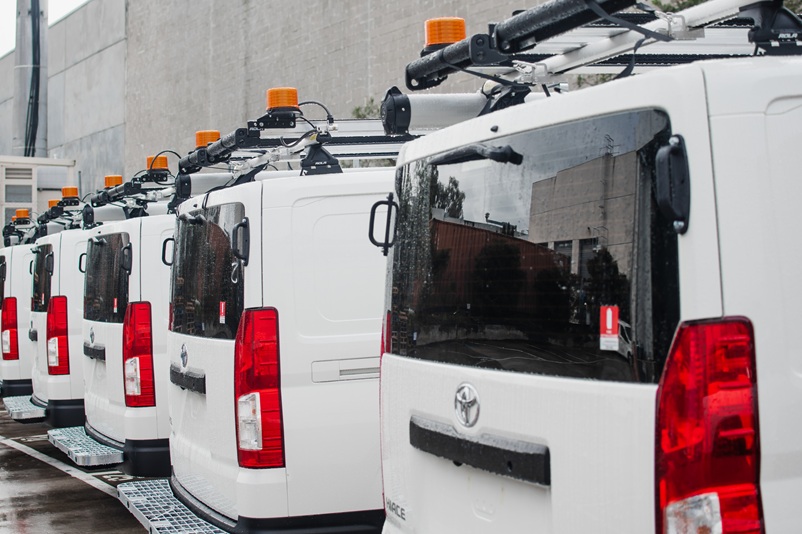
If you’re looking at a van for your landscaping business or fleet, talk to VQuip about your equipment list and a typical day on the road. We can help you plan a fitout that keeps tools accessible on site and locked away between jobs.