
Why Every Fleet Vehicle Fitout Should Include a Fire Extinguisher
Mar 10, 2026
Modern fleet vehicles are becoming increasingly complex. In many service vans and work vehicles, the factory electrical system is only part of the picture. Auxiliary electrical systems are common, powering inverters, secondary batteries, refrigeration units, communication equipment, lighting, and specialised tools.
While these systems provide enormous operational benefits, they also introduce additional electrical components, wiring, and load into the vehicle. That is why including a fire extinguisher as part of a fleet vehicle fitout is a simple but important safety measure.
Auxiliary Electrical Systems Increase Fire Risk
Auxiliary electrical installations can include:
-
Secondary lithium or AGM battery systems
-
High-power inverters
-
12V or 240V electrical outlets
-
Roof-mounted equipment such as refrigeration or air-conditioning units
-
Charging systems for tools and devices
These systems are typically designed and installed to high standards. However, any electrical system carries a potential risk if components fail, wiring is damaged, or a fault develops.
For example, a damaged cable, overloaded circuit, or battery fault could lead to overheating or an electrical fire.
In a vehicle environment where components are tightly packaged and exposed to vibration, dust, and heat, having a means to respond quickly to a fire is an important precaution.
Early Response Can Prevent Major Damage
Vehicle fires can escalate extremely quickly, particularly when electrical systems or batteries are involved.
A small electrical fire can often be extinguished in its early stages with the correct fire extinguisher. Without one, the only option may be to evacuate the vehicle and call emergency services — by which time the vehicle and its equipment may already be severely damaged.
For fleets operating nationally, a single vehicle fire can result in:
-
Loss of the vehicle
-
Loss of expensive tools or equipment
-
Downtime for the technician
-
Project delays or missed service appointments
Providing technicians with access to a fire extinguisher gives them the ability to respond immediately if a minor incident occurs.
Choosing the Right Type of Fire Extinguisher
Not all fire extinguishers are suitable for vehicle environments.
For fleet vehicles with electrical equipment, the most commonly specified extinguisher in Australia is an ABE dry chemical powder extinguisher. This type of extinguisher is versatile and designed to handle several common fire types:
-
Class A – ordinary combustible materials such as plastics, trim, or packaging
-
Class B – flammable liquids such as fuels or oils
-
Class E – electrical fires
Because fleet vehicles may contain a combination of electrical equipment, combustible materials, and fuel systems, ABE extinguishers provide broad protection across these potential fire sources.
In most fleet vehicles, the typical extinguisher size is 1 kg or 1.5 kg, which provides sufficient capacity while remaining compact enough to mount safely inside the cabin or cargo area.
These sizes are widely used across Australian fleet specifications and service vehicles.
The Importance of Correct Installation
Including a fire extinguisher in a vehicle is only effective if it is mounted correctly.
Extinguishers should be:
-
Securely mounted in a bracket
-
Easily accessible to the driver or technician
-
Installed where they will not become a projectile in a crash
-
Positioned so they are not obstructed by tools or cargo
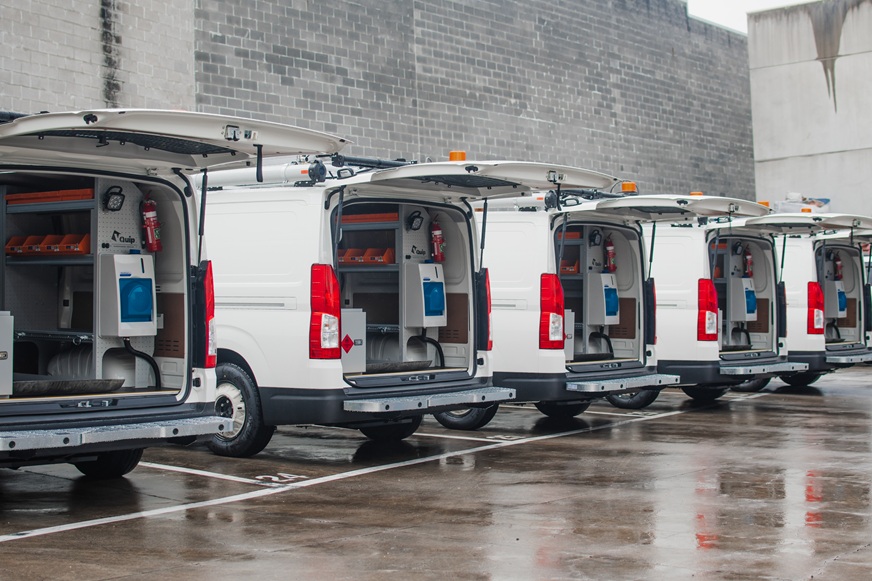
In many service vans, extinguishers are mounted near the side door or cargo entry area, allowing technicians to quickly access them when working around the vehicle.
A Small Addition That Improves Fleet Safety
Compared with most components in a vehicle fitout, fire extinguishers are inexpensive and simple to install. Yet they can make a significant difference in the event of an emergency.
For fleet managers, including a fire extinguisher as part of the standard vehicle specification is a straightforward way to improve safety across the fleet — particularly in vehicles with auxiliary electrical systems.
As fleet vehicles continue to incorporate more electrical equipment and battery systems, this small safety measure becomes even more important.